Exodus 19:2-6; Romans 5:6-11; Matthew 9:36-10:8
Moses is in communication with God which makes him stand out among all other leaders. When his father-in-law, Jethro, visited him, Jethro recommended to Moses to appoint additional judges to settle the regular disputes and save his energy for the difficult ones. Moses agreed and his burden became lighter.
God promised Moses a kingdom of priests.
It is in the wilderness of Sinai, the area where there are no human settlements where the Israelites go and where Moses climbs the mountain to be closer to God. There, Moses is asked to remind the Israelites of how God has been protecting them. God promises to give this nation a special place – as long as they obey God’s voice and hold fast to their covenant with God. A kingdom of priests, of people who dedicate themselves to God as God is protecting them against their enemies. A kingdom is usually connected to a ruler, a warrior, a conqueror. This kingdom, however, is that of priests, chosen by Moses to support him in his work.
When God reiterates that God protects the righteous, the honest, those who hold fast to their covenant with God, it strikes as a surprise to learn that Christ ‘died for sinful men’. In St Paul’s Letter to the Romans, he questions this action. The conclusion is that God loves all of us – including the sinners. Paul even goes one step further and points out that Christ died for all of us, irrespective of our worthiness, and through his death we all become righteous. An altruistic cleansing process? We are reconciled through Jesus Christ, the Son of God. God, the father, deserves our faithful and joyful trust. Jesus Christ is God’s proof that we can trust in God’s love for us.
Jesus is God’s answer to our burdens. God promised to the Israelites that they would be protected as long as they kept the Commandments. St Paul reiterated that God loves everyone and that through Christ, we are reconciled – even if we are sinners.
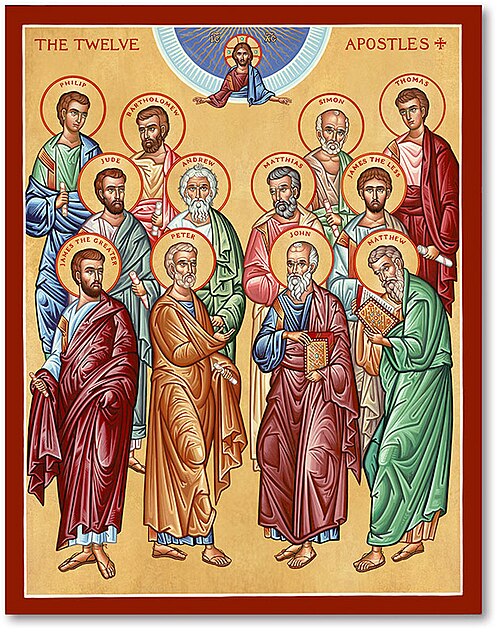
In the Gospel according to Matthew we learn of Jesus performing miracles, casting out evil spirits and healing people in different places. Just like Moses who is the judge among his people and who heals relationships, Jesus doesn’t seem to have a moment of rest. He even tries to escape the crowds. It is in this situation that he realises that he needs support. He feels compassion for the people he can’t reach, and so he appoints twelve apostles who he sends out to help cure the people. Jesus equips them with detailed instructions. As Moses had given authority to judges for the ‘easy’ cases, so does Jesus. He asks his apostles to confine their work to the Israelites. The Israelites have the same foundation as the apostles. They have heard about the kingdom of heaven and believe in the same God, and so the apostles don’t have to face unknown territory but rather concentrate on their own flock.
The power to heal and to cast out devils is given to the apostles as a gift from God. So, Jesus reminds them to use this gift for the good of others without charging them.
God’s love is for all of us – and God doesn’t charge us. While there might be chosen apostles who are sent out to heal us, their healing power is God’s power. As the Gospel passage reminded us: one of these apostles would ultimately betray Jesus for money and another one of them would deny Jesus in a difficult moment. The apostles are not flawless. They are sinners as all others, but they are the disciples chosen by Jesus in this moment to help him carrying out God’s healing work. Jesus chooses twelve apostles – a number that expresses fulness. Once one of them is gone, a new one has to be chosen. We might consider them as deacons, ministers or co-operators between God and the people of God.
BM