Deuteronomy 8:2-3,14-16; 1 Corinthians 10:16-17; John 6:51-58
Remember God’s actions… In Deuteronomy, Moses reminds the Israelites not to forget who freed them. The one who led them through the desert and fed them with heavenly bread.
Once we have survived uncomfortable or challenging situations, we want to forget about these experiences. We want to move on. However, it is the remembrance that fills our hearts with gratitude that we survived. This memory of bad times makes us humble.
Similarly, Moses didn’t want the people to forget what they had been through and that it was God who saved them. Gratitude and humility. Gratitude or thanksgiving which is the literal translation of ‘Eucharist’, and humility which means ‘down to earth’.
During the most difficult times in the desert, the Israelites had complained about not having food for survival. God then provided them with manna which they didn’t know but which kept them alive.
The warning: “Do not become proud of heart” was as current then as it is today. Pope Leo XIV used this warning also in his first encyclical Magnifica Humanitas. He reminded us of the risk of building a tower of Bable which will eventually collapse. People who try to compete with God will fail.
In 1 Corinthians 10, Paul refers to Moses and the spiritual food and drink God provided for the Israelites. Paul warns people of becoming idolaters and believing that they wouldn’t need God. While we might have to face temptations in our lives, they are manageable. God wouldn’t give us tasks that we could not master as long as we genuinely try.
The community of believers participates in the body and blood of Christ. The cup becomes a cup of thanksgiving, and the bread becomes one loaf, one body – one people of Christ.
The Gospel according to John is the Gospel of the signs and of the ‘I am’ statements. Here, Jesus says that he is the bread of life, the ‘living bread which has come down from heaven.’
God provided manna for the Israelites. The food that sustained them in the desert. Food from God which they had never seen nor tasted before.
Now, Jesus provides the food. He has come down from heaven to nourish us. God has sent him as he sent manna in the time of Moses. Manna sustained the Israelites for their time in the desert. The food that nourished them became part of them.
Jesus announces that ‘Anyone who does eat my flesh and drink my blood has eternal life, and I shall raise him up on the last day’.
Jesus wants to be in full communion with us. His companions who shared the bread with Jesus at the Last Supper, were becoming one through sharing the one loaf of bread. Therefore, they were truly ‘com-panions’ (sharing bread).
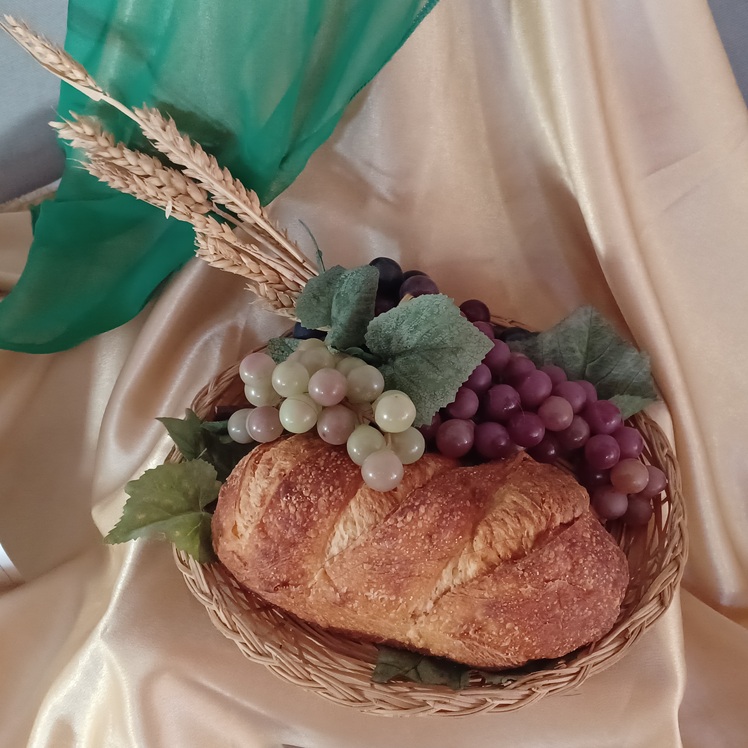
Bread is not any kind of food. Bread was the staple food in Jesus’ time and is still the staple food in many countries in the world. It is very special as it requires human effort and God’s blessings: ‘Fruit of the Earth and Work of Human Hands’. Without the human effort, there would be no bread, but without God’s blessing all human efforts would be in vain. The right soil and the right weather are crucial.
A good relationship between God and the people will bear fruit that will give us eternal life. Christ is present in the Scriptures, in the assembly at Mass, in the celebrant and in the Eucharist.
The Eucharist as a sacrament refers to an action. Apparently, the Latin word ‘sacramentum’, was used in Roman law to describe a legal sanction in which a man placed his life or property in the hands of the supernatural powers.
St Augustine (Sermon 228B,3) described the Eucharist in the following way:
“To be present at the Eucharist and to be unaware of this intimate connection between what happens there and our own identity as the body of Christ, would be like being on the road to Emmaus, unaware of the one walking the road with us. If we truly believe, we must have Christ with us in our hearts. In that case our lives are open to transformation:
‘Just as this (the body and blood of Christ) turns into you when you eat and drink it, so you for your part turn into the body of Christ when you live devout and obedient lives.’ “
There is a popular that says ‘We become what we eat’. As the body of Christ, we are called to be more like him…
BM