Acts 6:1-7; 1 Peter 2:4-9; John 14:1-12
A very practical issue demonstrated the discrimination against the Hellenistic Jews, the Jews of Greek culture, including converts: their widows didn’t receive food and hence weren’t cared for in the same way as the Hebrew widows were.
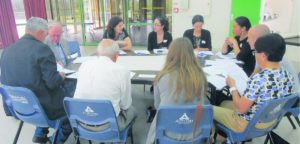
The disciples address this issue in a synodal way: they listen to the issue, discuss it and decide that it would be best to appoint assistants, deacons, to carry out some of the practical, pastoral work in cooperation with the disciples. The candidates need to be of ‘good reputation, filled with the Spirit and with wisdom’. Before implementing the solution, the whole assembly is consulted again and agrees with the suggestion. The congregation chooses seven persons from among them with one of them being Stephen, a Hellenistic Jew. Only then they are commissioned by the disciples.
This structure is built to spread the Good News. Important is here the Holy Spirit. When the resurrected Jesus spoke to his disciples, he made it clear that he had left the Holy Spirit with them. The new assistants need to be people who are animated by the Holy Spirit – and they are chosen from among the believers.
In the First Epistle of Peter, he uses the metaphor of the building of a house. God is the ‘living stone’. Only the believers understand that this living stone is the foundation of the new building. While others might overlook it and then stumble over it, the believers, filled with the Holy Spirit, recognise its importance and make it the cornerstone, the foundational stone.
Jesus also talks about a building when he refers to the places he has prepared for the believers: ‘There are many rooms in my Father’s house.’
What does a ‘house’ mean to the people he talks to? A home, a family, a safe space, a sense of belonging? Having more than one room in a house implies that each room might be different in size, location, furniture and company. Does this reference mean that God has a place for all believers and that God knows us so well that we will all have the right place for us where we feel we belong?
God’s house is different to any house we can imagine. It is built of ‘living stones’. The believers themselves will make up this house.
In our first week of Lent, we read about Jesus being tempted by Satan and asked to turn a stone into bread. Jesus refuses to do so.
We commonly consider stones as lifeless while bread is life-giving. Now, Jesus refers to living stones which sounds contradictory, but for God nothing is impossible. These living stones will make up a spiritual home.

Last week, Jesus said that he was the gate, now he says that he is ‘the way, the truth and the life’. Jesus doesn’t show the way, doesn’t explain how and where to go. Jesus is the way. Just like Jesus didn’t say that he would open the gate but rather be the gate.
The way to the Father is through Jesus – Jesus is in the Father and the Father is in him. There is no other way. Filled by the Holy Spirit, we will understand this message of the Trinity.
The disciples seem to struggle with this concept. From the Hebrew Scriptures they would have known that only very few people have been allowed to see God. If God is Jesus’ father, couldn’t he give his closest circle on earth the privilege of seeing God? How challenging would it have been for them to try to understand that the Father was in Jesus – the same Jesus who has spoken to thousands of people…
BM