Acts 2:14,36-41; 1 Peter 2:20-25; John 10:1-10
The apostles have met Jesus after his resurrection and might have hoped he would stay with them, but instead they were asked to continue God’s work with the help of the Holy Spirit.
It was hence the Holy Spirit who was asked to help with the decision of who would be the best person to replace Judas. Matthias was chosen.
At Pentecost, the miracle of the tongues was experienced, and Peter put all what had happened into the context of the fulfilment of the Scriptures. Many of the people in Jerusalem, who had voted for Jesus to be crucified only 50 days earlier, were scared.
This is the situation when Peter addresses the crowds again. The apostles had received a mission and knew that the Holy Spirit would support them to fulfil their mission.
The people in the crowd were wondering whether Jesus was their Lord and leader on earth or rather the Christ, the anointed one, the Messiah who they were longing for. Peter answers this question by saying that Jesus is both: the Lord and Saviour sent by God. It is through believing in Jesus that sins are forgiven, and this belief is expressed in being baptised in the name of Jesus. The baptised will receive the gift of the Holy Spirit.
Peter’s words attract many people, and so on this day alone he convinced about 3,000 people of getting baptised. A true multitude.
In the first letter of Peter, he asks people to take up their own crosses. As long as they are doing what is right, they will be saved. He reminds them that Jesus was innocent in every way, and yet he suffered for all. While the people had been following Jesus before his condemnation, they had gone astray like sheep. Jesus is the shepherd and guardian of the souls. Jesus’ wounds are the gate through which the people enter for being saved.
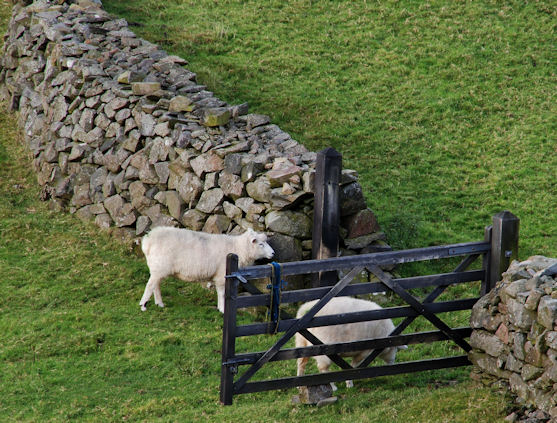
Jesus uses the picture of the sheep, the shepherd, the sheepfold and the gate in the Gospel according to John. In the letter of Peter, he considered the ones who didn’t stick with Jesus as having gone astray. Going astray can have many reasons. They could have been misled on purpose or just been distracted.
Here, however, it is a clear warning of protecting the sheep through a sheepfold with Jesus being the gate to the community.
The people in the crowd who are addressed would have been familiar with the sheep who know their master’s voice. There have always been many false prophets who lead people astray just as thieves have always tried to get into the sheepfold where the sheep are extremely vulnerable as they can’t escape.
The sheepfold is to keep the ‘community’ of sheep safe. Jesus is the gate. He is not a gate keeper who decides on whether someone is allowed to enter. He himself is the gate, the security and the protector of life – going through him means having life in abundance.
BM