Members of the Abrahamic traditions celebrating 30 years of the Auckland Council for Christians and Muslims (CCM)
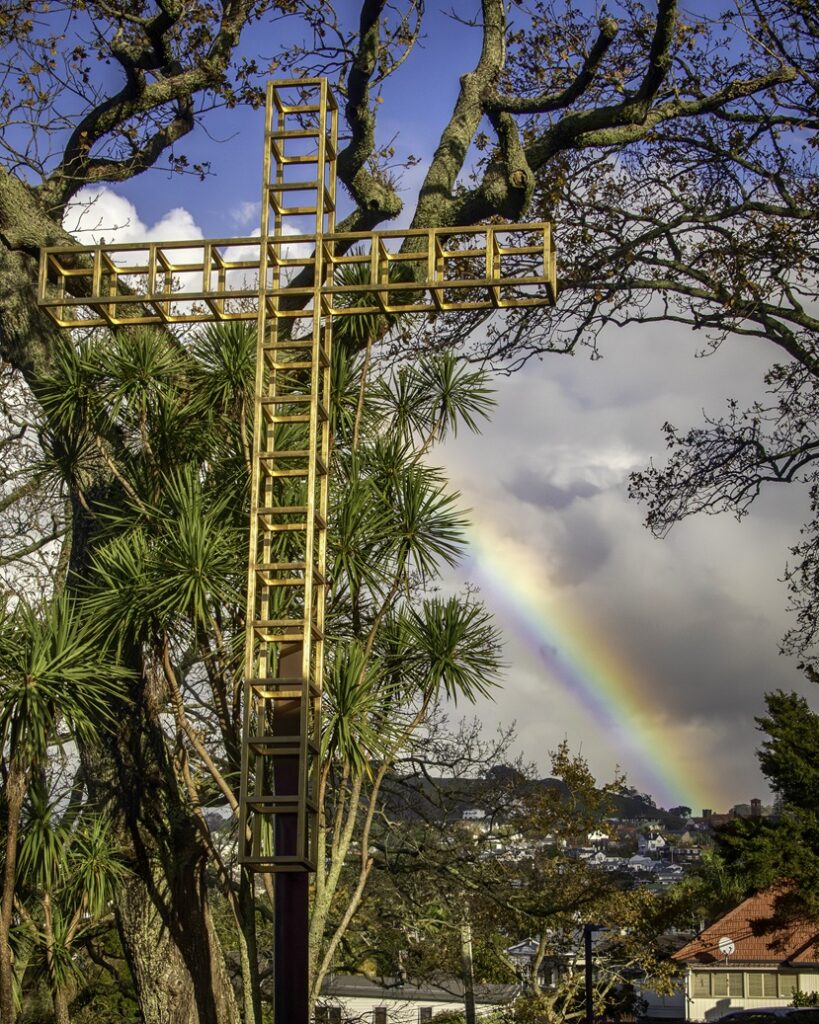
The big windows in the Selwyn Chapel of the Auckland Anglican Trinity Cathedral provided an amazing view: the sun and rain taking turns – and sometimes they even seemed to be visible at the same time…
This was a perfect setting for a celebration of diversity and unity. On this rainy and sunny afternoon, the Auckland Council for Christians and Muslims (CCM) celebrated the 30th anniversary since its foundation. Members of several Auckland groups, organisations and communities came together in the Anglican Cathedral to reflect and to celebrate this milestone.
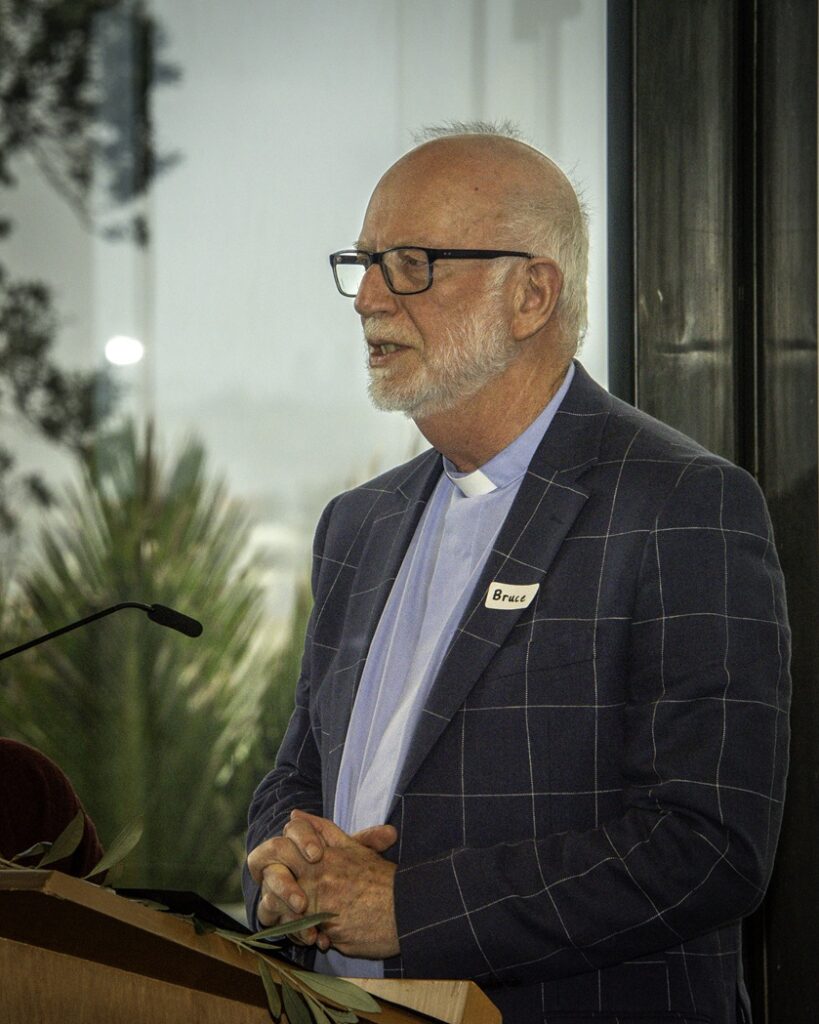
Rev Bruce Keeley was one of the founding members of the CCM and was the first keynote speaker. He recalled the beginnings of the organisation which he traced back to the first military coup in Fiji on 14 May 1987 which was followed by the second military coup in the same year. As a result of the new system in the country, many Fijian Indians fled and arrived in Aotearoa New Zealand. However, this was not just an influx in people, but as many of the new arrivals were Muslims, it was also an influx of Muslims into a mainly Christian country.
In June 1996 the organisation Pax Christi held a prayer vigil in front of the museum in the Domain to which Christians, Muslims and Jewish members of the community came. They had the idea of founding a council similar to the existing Auckland Council of Christians and Jews (CCJ). Rather than widening the existing Council to include the Muslims, they decided to start with a Council for Christians and Muslims working together with the CCJ.
Keeley compared the first years of the CCM with their members entering a romantic relationship with each other: they started very tentative and maybe anxious, gradually became more relaxed and could finally even discuss controversial topics with each other, e.g. “The Significance of Jerusalem” or “Who is Jesus?”
The partnership grew into friendship, and many initiatives were born out of it. The most important of those is the annual Peacenic – a picnic in a public park where the participants share food and company in a relaxed atmosphere.
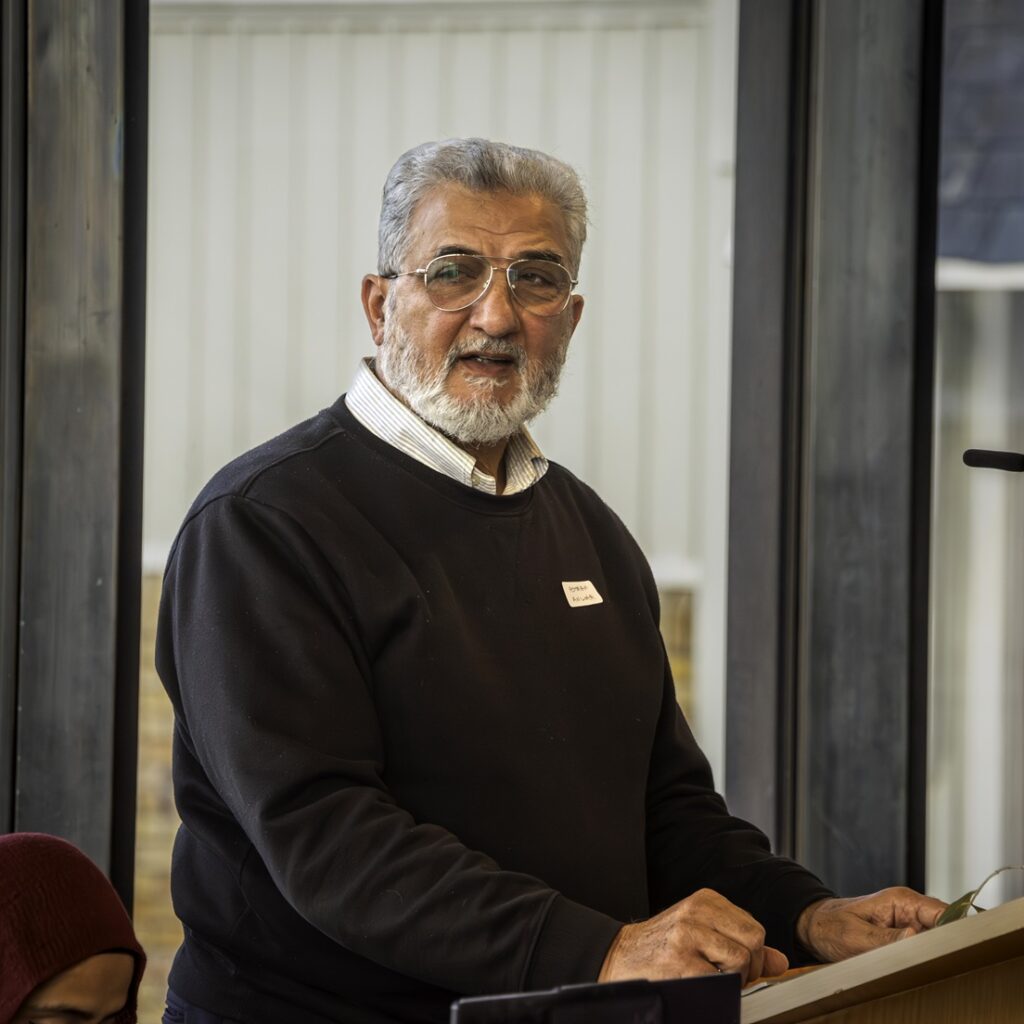
The second keynote speaker, Dr Ashraf Anwar, connected the cooperation of Christians and Muslims to their roots.
Anwar shared his experience of growing up in Egypt and remembered how the people of different faiths used to intermingle forcibly. The difference between them was the place of worship they went to. Both Christians and Muslims hold the Virgin Mary in very high regards, and for the Egyptian Christians, the Copts, the focus is on Jesus and the Holy Family.
Sometimes people forget that Islam didn’t start with the Prophet Mohammed but rather with Adam and Eve. In fact, there are 25 prophets in Islam who are mentioned by name. These include Elijah, John the Baptist and Jesus.
Out of these prophets, Jesus is special for Muslims as he was already special prior to his birth – through the Virgin Mary. For Egyptians, there is an additional connection to Jesus through the account of the Holy Family’s Flight to Egypt.
The two keynote speeches were followed by representatives of organisations who shared some key messages of their approach towards peace and harmony in a society that is made up of different religions and faiths.
Pax Christi, whose members were instrumental in founding the CCM are part of an international Catholic peace movement which started just before the end of the Second World War. The late David Wakim, the first national president of Pax Christi Aotearoa-New Zealand, was passionate for justice and peace. He wanted to break down barriers and called for manaakitanga, kindness.
Judith Crimmins, a member of Pax Christi, recalled especially the service of solidarity when Christians and Muslims came together in Ponsonby, Auckland, after the Christchurch shootings in 2019.
This quest for peace was also pointed out by Heather Denny who spoke on behalf of the Religious Society of Friends, the Quakers. She reminded the audience that world peace starts at home.
Bruce Harrison, the Catholic member on the CCM Executive, introduced ADCEIR, the Auckland Diocesan Commission for Ecumenism and Interfaith Relations, with a special focus on reaching out not only to all Christians but also to members of other faiths and religions.
Beate Matthies explained the background to this work. As the Catholic representative on the Auckland Inter-Faith Council, she is also representing the Auckland Diocese on the national Catholic body of interreligious dialogue, the NZCBCIR.
The Catholic involvement in interreligious dialogue and interfaith would not be possible without the document Nostra Aetate which was promulgated by Pope Paul VI in 1965. In a time of huge political tensions and in the midst of the Cuba Crisis when the people in Europe were fearing to be drawn into a third World War within 50 years, Pope John XXIII called the Second Vatican Council. For this Council, he also invited observers from Orthodox communities as well as Jewish and Muslim guests. One of the documents that resulted from this 3-year long Council was Nostra Aetate which translates to “In our times”.
This document invited Catholics to reach out and to get involved in interreligious dialogue. In a time of people travelling to far away places and living together with people of many different faiths, it had become crucial to remind ourselves that we are all part of God’s Creation.
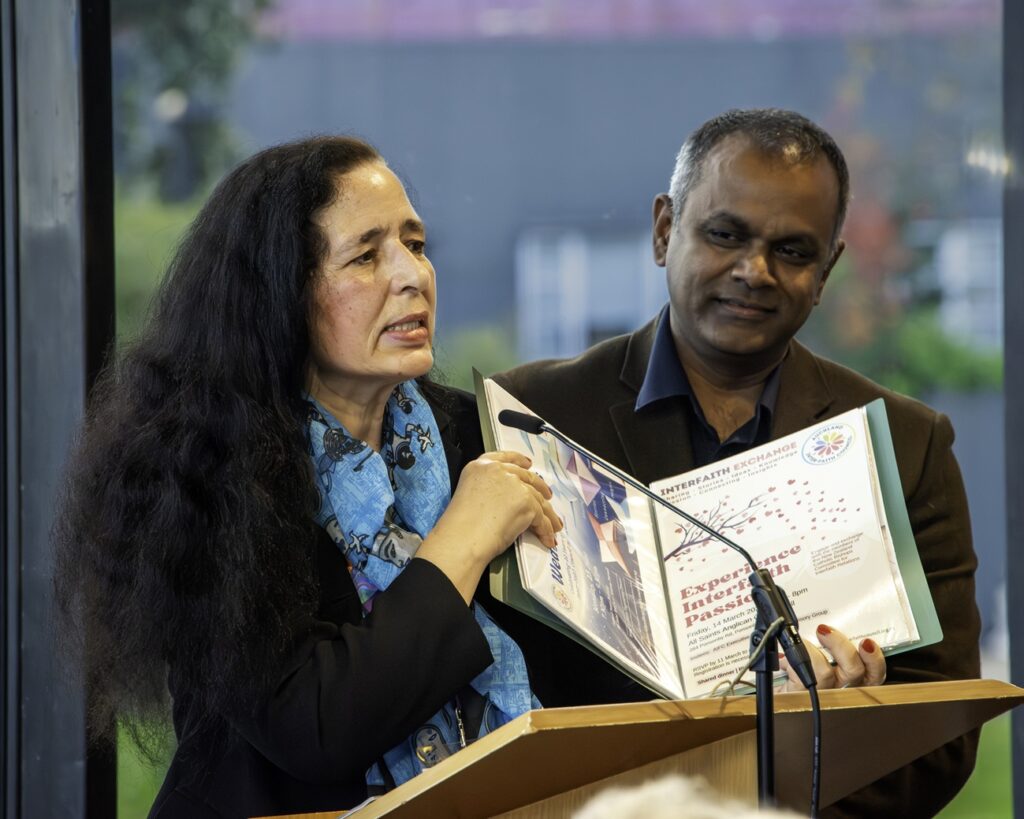
The Auckland Inter-Faith Council (AIFC) is a wonderful example of this cooperation. Since 2022, the position of president is shared between Beate Matthies (Catholic / Abrahamic tradition) and Ram Lingam (Hindu / Dharma tradition).
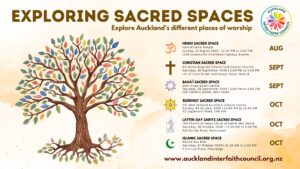
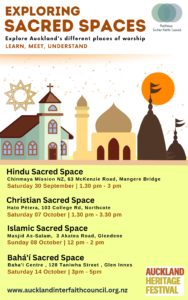
The two co-presidents introduced the work of the AIFC whose Executive members are appointed by their respective faith communities. These volunteers organise several events every year with one of the highlights being the “Exploring Sacred Spaces”, visits to different places of worship across Auckland. At these visits, the guests are invited to hear about the hosting community, their practices and to mingle with participants from a diverse range of religions and faiths.
Members of different religions share many values and concerns. One of them is the care for the earth. Ricky Waters, the director of the Religious Diversity Centre (RDC) introduced their new publication: “Building a Climate of Hope”. The RDC also organises an annual Leadership Diversity Day to which college students are invited to meet with students of different religions and to share their thoughts about specific topics in relation to their faith.
The final speaker was Adem Soylemez from the Pearl of the Islands Foundation ((PIF), a movement founded by the Muslim scholar Fethullah Gülen in Turkey. Soylemez explained the term ‘hismet’ (meaning ‘service’ in Turkish) as a civil society movement promoting the human being as material and spiritual. They have identified 3 Pillars of Dialogue: Education, Inter-Cultural Interaction and Inter-Faith Dialogue.
Soylemez reiterated that the Qur’an describes diversity as a part of God’s Plan.
The participants agreed that religious diversity enriches us all. The speakers provided much food for thought, and it was wonderful to see members of diverse faiths, ethnicities, cultures and languages to come together and share their thoughts with each other.
Article: Beate Matthies
Pictures: Barry Noel