Ezekiel 34:11-12,15-17; 1 Corinthians 15:20-26,28; Matthew 25:31-46
God calls Ezekiel to prophesy against the shepherds of Israel. They have taken advantage of the flocks they have been entrusted with. Instead of caring for them and protecting them, these shepherds have only been concerned about their own profit and gains – at the expense of the sheep they left scattered, leaderless and vulnerable to attacks.
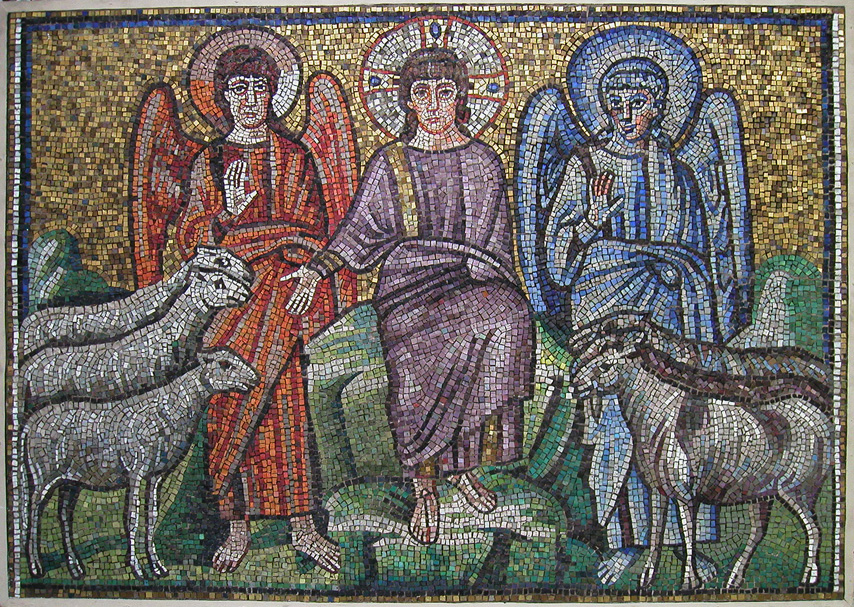
God is disappointed about these shepherds who were supposed to look after the flock. Therefore, God will now take over and be the shepherd. As a good shepherd knows every sheep by name, God knows each one and knows what each sheep needs and how to make sure that they are cared for. God also sees how each sheep behaves. Are there some he-goats among the flock who might distance themselves and start browsing new territories or are there some strong rams who defend those who are vulnerable or weak? Have the goats or sheep been selfish and only cared for themselves? The good shepherd sees their behaviour and knows who appreciates what is given to them and shares with others.
God knows them all and will judge each one of them according to their behaviour.
In Paul’s Letter to the Corinthians, it is also about getting ready for God’s judgement. Paul points out that it was due to the failures of the first man, Adam, that all humans must die. However, thanks to Jesus Christ all those who believe in him will live. Jesus was sent by God to prepare the kingdom. Jesus died and rose again and everyone who believes in him will also be raised. Jesus will be king with all authority and power until all enemies, including death, are destroyed. Then, God will be in charge to judge.
Paul’s focus is on motivating the people to live a life that would please God. Jesus was sent to give hope to the believers. Despite his death, he proved that this was not the end. Jesus rose again and so gives hope for life after death. Therefore, being faithful is not only important for this world, but is also a pathway to the heavenly kingdom. By the time judgement day comes, Jesus will have abolished all positions of authority and power. The judgement will be about the belief in Jesus and how this belief has been put in practice – not about the positions held on earth. Even Jesus, God’s Son, will subordinate himself once his task is fulfilled.
In the Gospel according to Matthew, Jesus’ role to separate those who have done God’s Will and those who have been selfish connects to the role of the good shepherd as mentioned in Ezekiel. God’s Son acts on God’s behalf and is enthroned to prepare for Judgement Day.
Christ the King assembles everyone, irrespective of where they come from and what background they have. He visually separates the people like the sheep from the goats: those who acted good and justly to the right, those who acted selfish to the left.
This is a different judgement to what people would have expected. Those who are honoured have done the right thing without expecting a reward. They have given others basic support, and hence attended to the hungry or thirsty, the stranger or the naked, the sick or the prisoner. They have done these good deeds without hesitation and without expecting to be paid for it. They didn’t ask whom they were serving. However, as it says in Ezekiel, God is the good shepherd who looks after his sheep, who knows when they need help, who cares for them when they are injured and who knows them by name. The good shepherd cares so deeply for each one of his sheep that anything done to them is done to him.
Those who have been separated from the virtuous are sent away. Jesus, accompanied by the good angels, sends them to the devil and his angels.
In Paul’s letter to the Corinthians, he explains the hierarchy of Judgement Day: Christ the King will first honour the virtuous, then he will destroy the enemies. Once the last enemy is crushed, God will take over and Jesus will step back.
As we heard in the previous parable, God has distributed talents or treasures and wants the people to make use of it. If we compare these treasures to the people of God, we see the parallels. Those who looked after the people, who kept them healthy and truly cared for them, are blessed with eternal life. Those who took God’s treasure for granted and ignored their duty of care, will be cursed.
God sees everything. God knows us so well as a good shepherd knows his sheep. God can’t be fooled. It is not about performances that everyone can see and admire, nor it is about using a position of power. Our power might be hidden in the ability to perform little acts of kindness. A smile. A thank you. An honest question of asking how someone is. Keeping one’s eyes open to see where we can act to make a positive impact, to make a difference in someone else’s life. By looking after one another, we are also preparing out pathway to the heavenly kingdom.
God will see what we are doing. God will know when we need help or when we can reach out.
BM