Apocalypse 11:19,12:1-6,10; 1 Corinthians 15:20-26; Luke 1:39-56
During his first Mass in Aotearoa Bishop Jean-Baptiste Pompallier dedicated the land to the solemnity of the Assumption of the Blessed Virgin Mary which has made the 15th of August a special feast day for the Catholics in New Zealand.
In the first Reading of the Vigil Mass, King David was described as he organised a procession with the Ark of the Covenant into the newly built tent.
The Book of Revelation, the last book of the Bible was written to reveal and to give hope. The visions described in this book include the blowing of trumpets which announced plagues as divine punishment. When finally, seven trumpets are blown, God’s Kingdom is announced. This is when the heavens open and the Ark of the Covenant becomes visible.
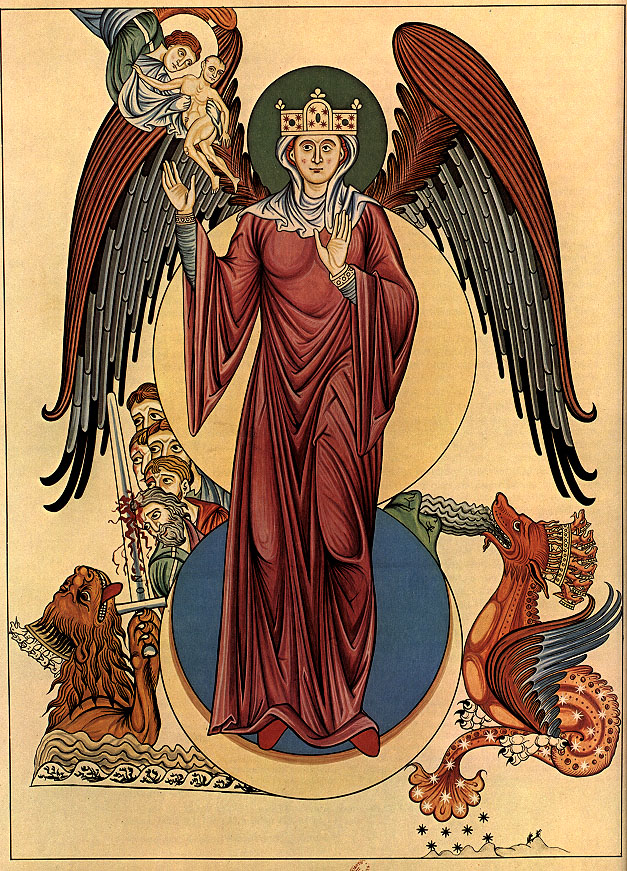
Seeing the Ark of the Covenant was often considered as a sign for the end of times. However, the “woman, adorned with the sun, standing on the moon, and with the twelve stars on her head for a crown” is also being seen in heaven. The story that follows is dramatic, but with a good ending. The woman giving birth is not named. The son she bore is taken to God and saved from the evil dragon who wants to prevent the child from becoming a powerful man. The woman finds refuge.
The woman is compared to Mary. She is adorned by heavenly bodies, the sun, moon and the stars. She gives hope by giving birth to a son who will be the king and saviour. He will bring justice to the world – born by a heavenly queen. However, even at the time of his birth, the evil one is there, waiting for him to be born so that he can destroy him.
It is comforting to learn that God’s angels saved him and his mother before the dragon could touch them.
The woman was standing on the moon… Mary is often depicted standing on the moon with one foot crushing the serpent, the symbol of evil.
In his letter to the Corinthians, Paul used this picture of Jesus crushing his enemies under his feet. Paul compares Jesus to Adam, but while Adam is a symbol of humanity and death, Jesus Christ has made possible the resurrection of the dead.
In this Sunday’s Reading of the Gospel according to Luke, Mary visits her cousin Elizabeth. Both women are pregnant – just like the woman in the Book of Revelation. Elizabeth’s pregnancy was considered a miracle after years of childlessness. Mary was expecting a child through the power of the Holy Spirit. At the encounter of the two women, Elizabeth is filled with the Holy Spirit and her child leaps in her womb. As she blesses Mary and the fruit of her womb, Elizabeth cries out for joy praising the presence of God.
Mary answers with the beautiful Magnificat: ‘My soul proclaims the greatness of the Lord […]’ The Magnificat is not only a song of praise but also speaks of justice and mercy for all. It is a warning to those who have more than enough and yet ignore the poor and hungry. It is a call for solidarity and a reminder that God acts on behalf of marginal and exploited people.
As Pope Leo XIV has announced his message for the 112th World Day of Migrants and Refugees in September, he is referring to a cry of desperation and a call for help.
The cry of joy by Elizabeth is followed by Mary’s praise and her call for justice. Pope Leo refers to the “cry of displaced children”, and so he chose as the theme for this year’s World Day of Migrants and Refugees: “Even just one of these children.”
Do we hear the cries of joy and of desperation? Do we share the joy and pain with others? Do we seek justice for the vulnerable?
BM