Apocalypse 7:2-4,9-14; 1 John 3:1-3; Matthew 5:1-12a
The Book of Revelation which is also called the Apocalypse is the last book of the Bible and often mistaken as an obscure source of fear rather than a call for hope and faith.
It was written in a time of wars, destructions, persecutions and famines. In addition, there were two catastrophic and even apocalyptic natural disasters within less than 20 years, the Laodicea earthquake in 61 CE and the Vesuvius eruption in 79 CE.
The author of the book is John who is from Patmos, a Greek island. John, who is often described as a Jewish-Christian prophet recounts a revelation given to him by God through an angel.
His language is filled with symbols of his time. So, he describes the angel as ‘carrying the seal of the living God’. This seal seems to be a recognisable symbol that makes John trust this angel. Similarly to the story in Exodus when the Israelites were asked to put blood of the slaughtered lambs on the sides and tops of the doorframes of their houses which indicated to the angel of revenge to pass over these houses, this angel of God with the seal makes sure that those who have found God’s favour would carry the seal of the living God and hence would be spared.
144,000 people are saved from destruction. This number symbolises completeness and we can tell that the number is huge as, even today, we describe a huge multitude with ‘thousands’.
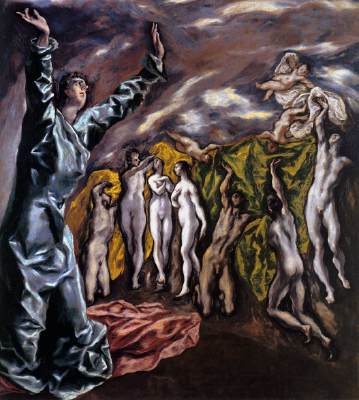
One of the fascinating parts of the account is the mentioning of the diversity of the crowd. They are of “every nation, race, tribe and language”. With John living on a Greek island, he would have met people of many different backgrounds who might have been divided in faith previously and yet were interested in the message of Jesus Christ.
God sends an angel to save those who have found God’s favour – what they have in common is faith. God doesn’t judge people according to characteristics they didn’t choose.
The diverse group of people are united in faith and are all dressed in white, the colour of joy and victory for “These are the people who have been through the great persecution, and they have washed their robes white again in the blood of the Lamb.”
While this sounds contradictory, the mentioning of blood and the lamb are again reminders of Exodus, but also of the Lamb of God who washed away the sins…
The second reading is also written by John. John has been reminding the faithful to stay steadfast even if there are powers that might try to lead them astray. Being called children of God is an honour that implies protection, care, love, likeness and responsibility. In comparison to idols and emperors, the ‘Living God’ doesn’t subdue, oppress and mislead the faithful. God’s faithful are people of hope. The future is not revealed yet, but as long as we do God’s Will, we have nothing to be afraid of.
Doing the right thing, pleasing God and putting our trust in God is beautifully expressed by the famous Sermon on the Mount. Jesus speaking from the top of a mountain indicates a message of revelation. He speaks to the crowds which reminds us of the multitude of people dressed in white as described in the Book of Revelation. The beatitudes with the repetitions of ‘blessed are’ or ‘happy are’, can be taken as guidelines for Christians to stay steadfast and faithful despite the vicissitudes in life.
The beatitudes cover many areas that would concern the faithful in Jesus’ times as well as today. They confirm that God will not let anybody down. As is described in the Book of Revelation: people of “every nation, race, tribe and language”. No matter what society we live in, how we are characterised by others, no matter if we are ‘poor in spirit’ or if we are suffering, God will be with us. However, it is important to remember that the beatitudes refer to suffering in the name of God. The beatitudes show us what we are called to do to reduce the suffering of others who suffer as a result of injustices inflicted on them in society. The positive actions to help and support the vulnerable, such as being gentle and merciful might lead to one’s own suffering. The fight for justice, for what is right, can be risky for us.
Since the 9th century, we are celebrating All Saints Day on 1 November, and we remember the lives of the many martyrs throughout history who have lost their lives for standing up for their faith and for others. They have suffered because they refused to deny their faith and have done what they believed was right to be worthy to be called God’s children.
We remember all saints, those who have been canonised and those who haven’t. Those we know about and might have met in our lives and those who we have never heard of.
Sometimes, small acts of kindness can have a huge impact on someone’s life. God calls us not to be afraid to do the right thing. ‘Rejoice and be glad, for your reward will be great in heaven.’
BM