Isaiah 5:1-7; Philippians 4:6-9; Matthew 21:33-43
The analogy is clear and direct. Isaiah doesn’t leave space for misinterpretation.
If the Israelites traditionally wanted to bring their first fruits as offerings in the Temple, they were limited to the specifically defined Seven Species of agricultural products, two grains and five species of fruit. Grapes were one of these fruits, and most likely the ones that required most effort and labour to grow them. So, vineyards were precious.
Isaiah has just pronounced the details about how God would be judging over the people of Israel. The elders and leaders were blamed for ruining God’s ‘vineyard’ (Isaiah 3:14).
Now, in the ‘Song of the Vineyard’, the owner of the vineyard, later revealed as being God, gives it another try. God prepares the ground and everything the vines need to grow good grapes by harvest time. Alas, despite all this effort and care, the grapes turn out to be sour, and the work seems to have been in vain.
The landowner is disappointed and destroys his own vineyard. There is no further chance. Anyone who wants to grow grapes on this land will have to start from scratch. Justice and righteousness are what God is looking for but can’t find. The destruction that follows the disappointment is complete. Not even the rain will give the vineyard another chance.
God has done the preparation with love, but the vineyard doesn’t provide any return on the investment.
In Paul’s address to the Philippians, he gives them hope and motivates them to pray. The kind of prayer he refers to is not a prayer of petition only, but also of thanksgiving. Through Christ, the immense peace of God will touch those who live an honest and virtuous life. Paul hopes that his life is a good example for others so that they can follow him in his footsteps to also please God. True commitment, faith in Christ, prayer and giving thanks will strengthen minds and hearts and give hope in difficult situations.
God has given us the ability to pray when we are in need. There is no reason why not to do God’s will as God will not disappoint us if we ask for support.
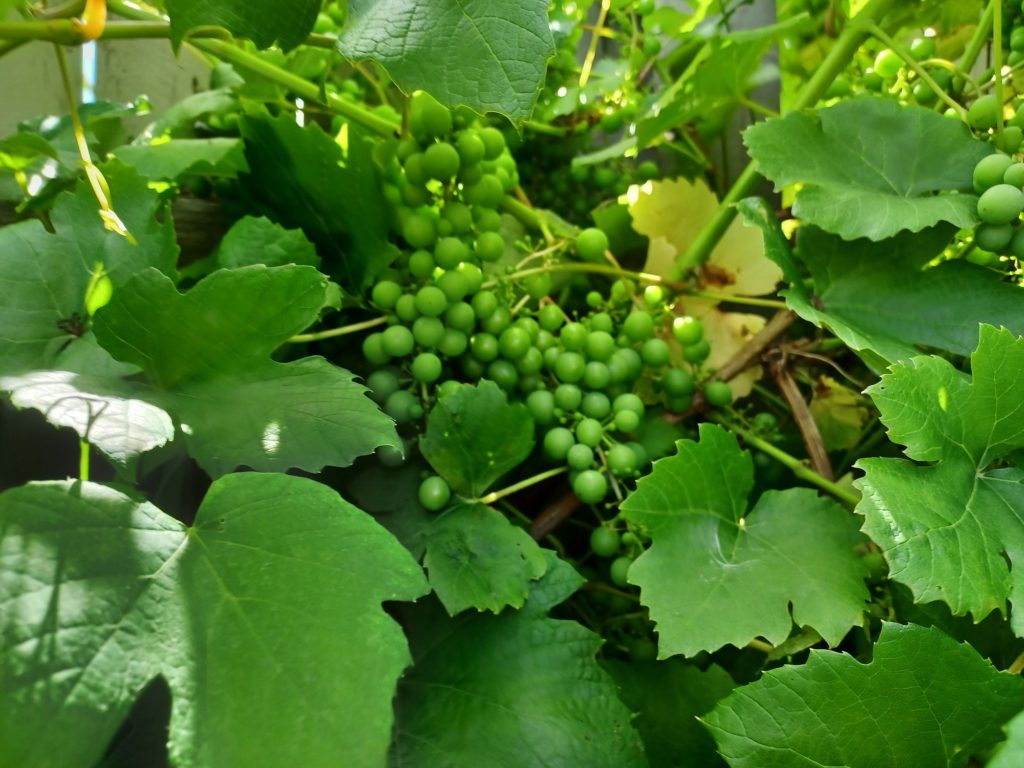
Following up on the parable of the two sons who were asked by their father to work in his vineyard, Jesus tells another parable to the chief priests and the elders of the people. This time the parable is about a landowner who did all the preparation for a good harvest, rented out the vineyard and when he sent messengers to collect his share of produce, the messengers were killed. The tenants didn’t even show respect to the landowner’s son as they also killed him. Jesus asks the chief priests and the elders how the landowner would (or should?) react to what has happened.
It is interesting to read that Matthew uses the same words and description as did Isaiah when he describes how the landowner prepares the soil and the establishment of the vineyard. In Isaiah, there is no mention of several messengers who are killed, let alone the son of the landowner being killed. Rather, the landowner destroys the vineyard and ‘punishes’ the vines because they are sour.
Jesus’ parable would have made his listeners think of Isaiah, but here the grapes are not the problem, but rather the tenants. So, the listeners don’t believe that the landowner would ‘punish’ the grapes. The human way to deal with the situation would be to punish the tenants and replace them with good tenants.
Jesus confirms their reasoning but also expresses a warning to them: “I tell you, then, that the kingdom of God will be taken from you and given to a people who will produce its fruit.”
At this stage, the chief priests and elders would have been those who are highly respected and expected to produce good fruit. Now they realise that they are also the builders who are rejecting the stone that would become the keystone.
Jesus’ analogy would feel like an attack to them. According to the Scriptures, they know that Jesus is talking about them. They feel uncomfortable and would like to get rid of Jesus just like the tenants removed the landowners’ messengers, but Jesus’ popularity prevents them to do so.
Yet, if Jesus’ audience would listen carefully to what he is saying, it would be clear that God gives a second chance. There is time to repent and choose a life that would please God. If we don’t know how to do it, we can follow Paul’s advice and ask God to help us.
Even when we think that we are rejected or have failed, there is hope through God and through faith – even the rejected stone can become the cornerstone of a new foundation. A good crop of grapes requires much care such as pruning, trellising, pest control, and disease management. Constructive criticisms could lead to containing negative behaviours as much as disease management can strengthen a vine and prevent destruction.
BM