2 Kings 4:8-11,13-16; Romans 6:3-4,8-11; Matthew 10:37-42
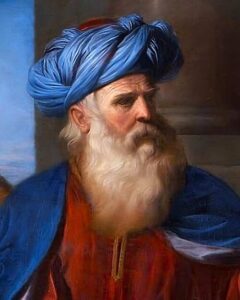
There have been many prophets in the Old Testament, and it is sometimes said that St John the Baptist, whose feast day was celebrated a few days ago, was the bridging prophet, the prophet who linked the Old Testament to the New Testament. Elisha, the successor of Elijah, who watched his predecessor disappearing with a chariot into a cloud was so special that God granted him his wish to receive twice as much power as Elijah.
Elisha had just been called by the King of Israel to communicate with God and obtain water in a battle with the King of Moab. Elisha was successful, and so he preserved the armies and their animals from death. Then, he performed a miracle for a poor widow and her son and saved them from starving.
Elisha seemed to have travelled regularly through Shunem. This is a place of strategic importance and the place where the Philistines camped when they fought Saul, the first king of Israel. When Elisha stayed there, he always stayed at the same place, in the house of a wealthy woman and her husband. The woman was convinced that Elisha was a ‘man of God’. She would not have known that Elisha left everything behind when he was called by God. She had not seen him perform miracles nor does it seem that she knew what Elisha was doing, but she was filled with the knowledge that Elisha was special. As Elisha was a good observer, he wanted to express his gratitude for her hospitality in a way that was most helpful for the woman. She didn’t need money nor material things, but Elisha found out that the woman had been longing to have a son. So, he announces to her that she would have a son within one year. This is how Isaac, Abraham’s son, and John the Baptist were announced to their parents. For the woman, the announcement was as unbelievable as it was for Sarah and Abraham.
A man of God thanking the person who provides hospitality him with a gift that was as personal as it could be: the gift of new life.
In Paul’s Letter to the Romans, Paul tells them that “When we were baptised in Christ Jesus we were baptised in his death”. Would they have understood what he meant?
The word ‘baptism’ derives from the Greek and as the Romans were fascinated and influenced by the Hellenistic culture of the time, they would have known at least that the word meant ‘immersion’ – in the positive sense of cleaning as well as in the negative sense of a boat sinking or a person drowning. Hence, the term of baptism would bear both notions: cleansing and dying.
In the Roman culture the people believed in afterlife. Jesus had died and had risen from the dead and was remembered by his followers. By recalling his name during the baptism, the connection with Jesus was re-established. This connection is so strong that the immersion is not only into water, but actually in Jesus’ death which allows us to re-emerge like Jesus did: with new life.
In the Gospel according to Matthew, we hear about people who leave everything behind as did Elisha. We learn about people who become a person of God, a ‘man of God’, providing hospitality and putting Jesus first.
While Jesus was talking to his chosen twelve apostles, he doesn’t refer to a hierarchy when it comes to following Jesus: man or woman, layperson or religious, with family or without a family. All are equal. It is not about their social status, their achievements or their blessings in life. It is about their actions. It is about following in Jesus’ footsteps.

The woman who welcomed Elisha was wealthy but childless. Despite her wealth there would have been an emptiness in her heart, and a feeling of a lack of blessings from God.
Yet, she had faith and showed genuine hospitality towards this man of God and supported him in his mission. She didn’t ask what his mission was. She helped preparing his way.
‘Anyone who welcomes you welcomes me; and those who welcome me welcome the one who sent me.’ Jesus wants us to be welcoming and to be hospitable. No judgement but love for the ones we encounter.
Pope Francis reminded us that we are all prophets, witnesses of Jesus, “so that the power of the Gospel might shine forth in [our] daily social and family life” (Lumen Gentium, 35).
BM