Proverbs 31:10-13,19-20,30-31; 1 Thessalonians 5:1-6; Matthew 25:14-30
The words of a mother to her son. It is not clear who King Lemuel is. Some say that he is Solomon, the son of King David. The mother would then be Bethsheba, who was so beautiful that King David wanted to have her as his wife and was even ready to kill her husband for it. Solomon is known for having had several wives and concubines himself.
Even if King Lemuel is a different person, the mother speaks to him wisely. She wants to protect him from making rushed decisions that might be borne of alcohol and instincts instead of a responsibility and duty to the kingdom.
The mother describes a good wife as a woman who is diligent, merciful and just. These virtues are more important than the physical appearance. If the woman is trustworthy and industrious, the husband doesn’t have to worry if she is faithful in his absence.
This description perfectly fits to the legend of St Elizabeth of Thuringia (also called St Elizabeth of Hungary) whose feast day is coming up in a few days. While her husband was away for months, some jealous royal advisors told her husband King Louis IV that his wife was stealing precious items from the castle. In reality, St Elizabeth used to take bread to the hungry. Eventually, the king had to confront his wife. When he asked her to show what she was hiding under her cloak, white and red roses fell to the ground. Her husband then knew that he could trust her despite anything his advisors were saying. She had done the right thing and was rewarded with a miracle.
A typical work that needs skills, perseverance and diligence is the production of fabrics and clothes. Knowing how to work well with the warm wool from animals and how to create fine linen clothes out of the flax from plants would require much practice and would have been a source of financial security for the whole household. The more beautiful and precious the results, the more the woman would be praised.
In between the verses that are quoted here, the perfect wife is also described as a businesswoman. A woman who doesn’t seem to sleep, works more than anybody else in her household and who then invests her earnings in fields and in new harvests. She works with merchants and wears fine clothes. Her whole family is proud of her. She is praised as soon as someone enters the city through the gate.
In his letter to the Thessalonians, Paul points out again the difference between the believers in Jesus Christ and the ones who don’t believe in him: here he uses the difference between darkness and light. While those who don’t believe are left in darkness and might be taken by surprise when Jesus Christ comes again, the believers are to be prepared.
We don’t know neither the day nor the hour, but we know that the time will come. We have no way to predict what will happen. So, we have to stay awake. Just like the Gospel story of the bridesmaids who were ill-prepared and then missed the wedding, we need to be ready at any time. When the hour comes, we don’t want to be sleeping and possibly even be drunk. Believers live in the light. There is no darkness – the believers have chosen the light.
In Matthew’s Gospel Jesus tells a parable to describe the Kingdom of Heaven. This story is about a master who entrusts three of his servants with a number of talents. The important part is when it says ‘each in proportion to his ability’. Just like God knows what we are able to achieve and would not overburden us, this master seems to judge his servants well. One talent was a huge amount of money, so he would have trusted all three servants. The first and second servant both invested the money they had received. They worked with the money. They were not idle and took the risk of losing the money, but managed to double it by the time the master returned. This made the master happy. He had entrusted them with his precious property, and they managed to multiply it.
The third servant who received the least money, didn’t want to take any risk. He buried the money. If he had been honest, he could have refused to take stewardship of the talent or could have invested it in a bank so that the master would receive some return.
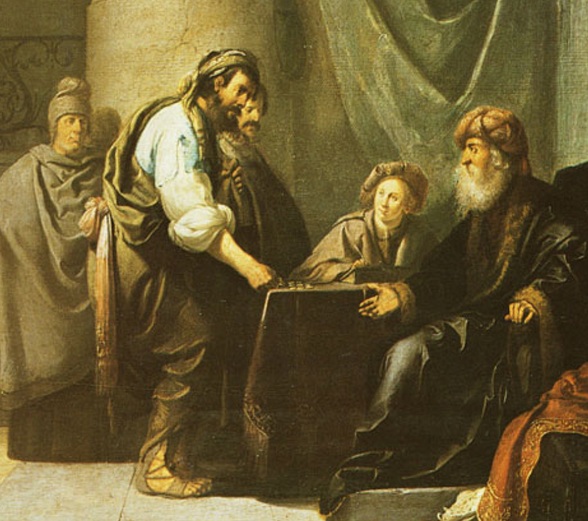
Why did he act this way? The talent he was entrusted with was buried, stuck in the dark – and at risk of being stolen. Was this servant weak or just lazy? Did the servant think that the master would come so soon that it was not worth investing the talent?
When the third servant received the talent, it is not clear if he asked why he received only one talent while the others received more. However, when he sees that the others multiplied their money, it is surprising that he doesn’t apologise but rather blames the master’s character and his fear of the master instead of explaining the reason for his own idleness.
If we use the term ‘talent’ as it is used in today’s world, we can compare it to the skills and gifts God has given to us. We are all different and have different skills and abilities. However, someone can be very talented and not use their skills – or maybe worse, never discover them. We all have received our individual skillset and are called to use these skills and talents to spread the Good News, to reach out to others and multiply the blessings these skills can provide us and others with.
Like the good wife in Proverbs, she is using her skills and improves her abilities to support not only her family but also others in the community. Her good works make her family proud.
When we use our God-given talents in a wise way, we won’t be selfish but rather spread our knowledge and help others find their talents.
As Catherine of Siena is often quoted: “Be who God meant you to be and you will set the world on fire.”
BM