Acts 1:1-11; Ephesians 1:17-23; Matthew 28:16-20
One of the key figures of the Old Testament is certainly Elijah. A major prophet who was taken to heaven in a chariot of fire, leaving his successor Elisha behind as well as the promise to return one day.
On the feast day of the Ascension of Christ, the parallel to Elijah is obvious. Through the Holy Spirit, Jesus has chosen and prepared some who he appointed to be sent out to proclaim the Good News.
In the forty days since his Passion Jesus has shown himself to them. He promises them that they would be baptised with the Holy Spirit if they stay in Jerusalem. Once they would receive this gift, they would be sent out to the ends of the earth.
The disciples would have asked how long they had to wait in Jerusalem, but Jesus doesn’t give a specific time. God’s time is not our time. Time is not relevant here. What matters is that those who continue Christ’s work are filled with the Holy Spirit.
Jesus ascends to heaven in front of their eyes – just like Elijah was taken to heaven in front of Elisha. However, Jesus, the Son of God, doesn’t need a vehicle. The apostles are amazed and their eyes seem to be fixated to heaven long after Jesus has disappeared. This is the moment when two witnesses of their amazement address them. Two men in white. Are these the angels who were at Jesus’ empty tomb? Their words sound familiar in this context as they are asking why they would look for Jesus. Jesus is gone for now, but he will come back.
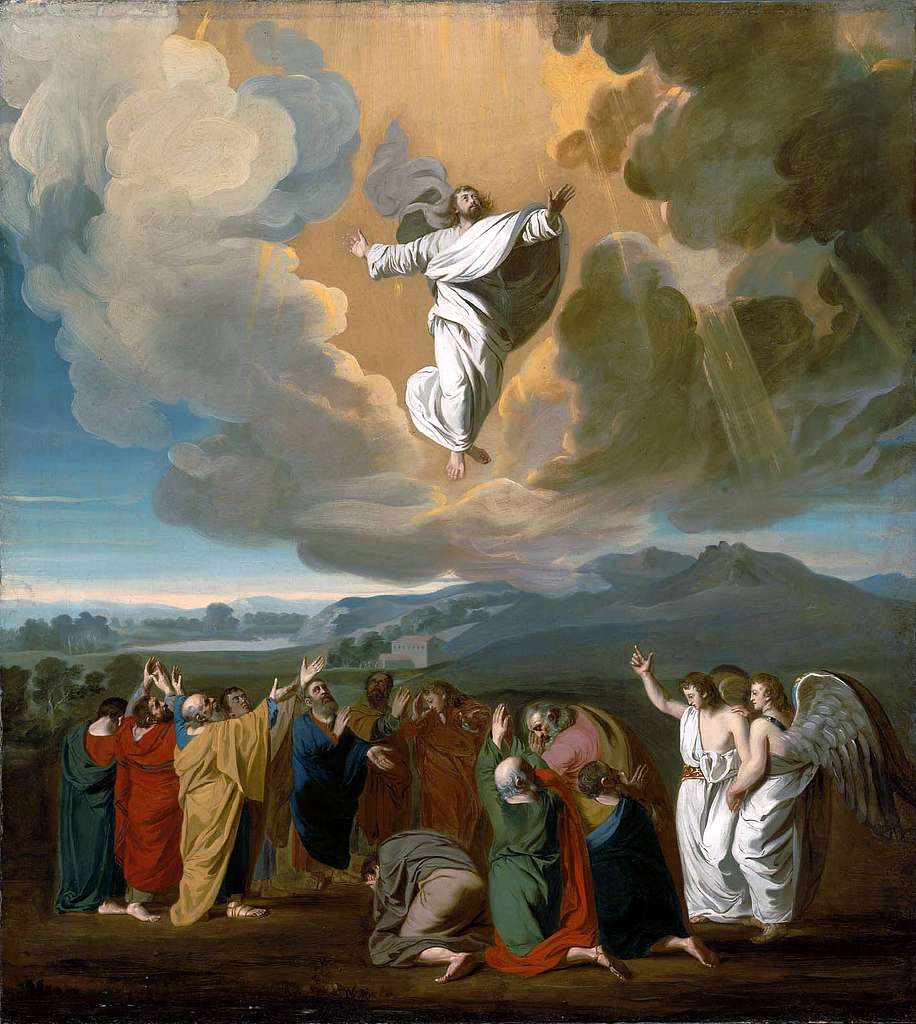
In his letter to the Ephesians, Paul prays for wisdom and knowledge through the Spirit to be prepared for leading the people.
In the Gospel according to Matthew, Jesus takes the eleven disciples on top of a mountain which is considered a place of proclamation in this Gospel. It is here that they are commissioned and sent out to make disciples. They are now called apostles, the ones who are sent out.
It is interesting to see that they don’t seem to react in a uniform way. Some ‘fell down before him, though some hesitated’. Jesus’ words here are the foundation of a Christian life: to go out and to make disciples of all the nations; to baptise them in the name of the Father and of the Son and of the Holy Spirit, and to teach them to observe Jesus’ commands he gave to them.
Jesus is not leaving them on their own. He reiterates that he would always be with them – at least through the Holy Spirit.
BM