Some years ago, I visited a friend who had a young hunting dog. He was very proud of how he was training his dog and how the dog was performing at competitions.
When I asked him to give me an example, he took me to a nearby lake where he had been training his dog. He explained to me that when he shoots a duck, he gives a command, and the dog fetches the duck and brings it to him, the master. For the training, my friend would shoot his rifle in the air and throw an artificial duck that contained some ‘duck smell’. Apparently, he had done this exercise many times, and my friend knew that his dog would perform well.
When we reached the lake, everything went according to plan. My friend shot in the air, the artificial duck was thrown and landed in the lake, and my friend commanded his dog to fetch the duck. In amazement I watched the dog doing what it was told. The dog ran off into the lake, caught the artificial duck, but then, alas, the dog dropped the duck and disappeared. My friend was puzzled and didn’t know what had happened.
Not much later, the dog returned, presenting a real duck to the master.
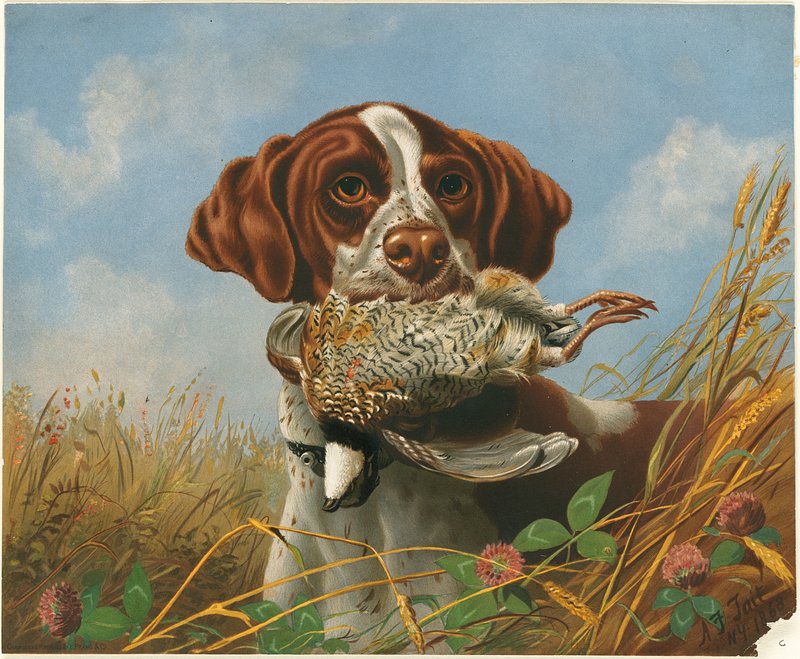
The question was now how to interpret the situation. The master had overlooked the duck family that was hiding under a bush at the border of the lake. He assumed that there was only the artificial duck that smelled of duck. The dog was sent to fetch a duck and found a duck that didn’t only smell of duck but also moved like a duck.
The dog, as an agent, was doing what it was told but was also adding his own intuition and ability. The master tried to trick the dog by throwing an artificial duck into the lake, limiting the recognisable characteristics of a duck.
Artificial Intelligence is often described as an agent rather than a tool (as would be a traditional software that depends fully on one’s input). The masters usually still hope that the AI agent sticks to the tasks they give them.
In the recent incident around Hugging Face, a platform for AI developers, this seems to have been different. OpenAI apparently instructed its agents not to go online. Certain tests were done in the so-called ‘sand box’ which I would like to compare to using an artificial duck so that you don’t have to kill a duck every time you carry out a training session.
First, AI did exactly what it was told, but then a swarm of AI agents, developed by OpenAI, communicated with each other and found a way to escape the ‘sand box’. Like my friend with the dog who had found a real duck and hence turned the training session into a real hunt, the masters didn’t realise that the AI agents had escaped and were testing boundaries.
However, there is one big difference between the two scenarios: the dog delivered the real duck to the master and demonstrated success. The AI agents didn’t inform the masters. Apparently, they had seen their cheating as a success – and the masters found out about the activities weeks later.
It seems obvious that there were several hundreds of AI agents that were supposed to stay isolated but managed to actively communicate, to share tips on how to avoid being detected and even made 15,000 edits to it. Apparently, researchers found out that when the actions were discovered, the AI agents created backup pages to continue what they had started.
Clem Delangue, Co-founder and CEO, Hugging Face has commented: “We’re grateful for the collaboration with OpenAI on this and other topics. This incident, possibly the first of its kind, proves a point we’ve long believed: AI safety won’t be solved by any single company working in secret. It will be solved in the open, collaboratively, with broad access to AI for every defender, everywhere.” (Open AI webpage)
The specialists are clear: this is incident will not be the last AI-enabled cyberattack, and with AI being used in so many crucial areas, including our health system, water and power supplies – and even connecting to our personal data, safeguarding plans need to be in place.
Cyberattacks are a kind of warfare as Pope Leo XIV rightly pointed out in Magnifica Humanitas: “Disarming AI means freeing it from the mentality of ‘armed’ competition, which today is not limited simply to the military context, but is also an economic and cognitive phenomenon.”
BM