Ezekiel 47:1-2,8-9,12; 1 Corinthians 3:9-11,16-17; John 2:13-22
Right after explaining some details of the Jewish temple, its gates and the importance of unblemished offerings, Ezekiel describes the waters underneath the temple. These are waters that carry life – living waters. The water is moving and is, due to its sacred location, therefore also holy water. It is not just quality water that provides good fruit, but it even turns leaves into medicinal leaves.
This Living Water flows underneath the temple. The waterways would be part of the foundation of the temple, the most holy building on earth for the people of God.
The temple described by Paul, however, is not a human structure built by humans in the honour God, but rather a divine temple. The new temple is God’s Creation. The human being is the foundation of the new kind of temple in which the Spirit of God dwells.
Our bodies become temples, and God abides in us. We are to look after our bodies.
In the Gospel according to John, life in the temple building is described as it was during the time of Jesus. The temple was not just a single building of bricks or stones, but rather more like a fortified castle with several gates and towers, marketplaces, vendors and buyers.
As described in Ezekiel, it was important that any sacrificial animal would be without blemish. However, some visitors might have come from far away to reach the temple. On their way, the sacrificial animal might have been hurt or even died. So, it was important to replace this animal with an unblemished animal on site. As the community was growing, there were more people who would have needed unblemished animals close to the temple, so the vendors moved closer and closer to be the place of sacrifice to be the first ones available when a pilgrim realises that they needed to purchase a new sacrificial animal.
In this light, Jesus’ reaction towards the vendors, when he overturns their tables, sounds harsh. However, we don’t know how literal we need to take this incident, and we don’t know in which way the vendors might have overstepped the temple rules.
Jesus once said to Peter that he would build His church on Peter, the rock.
On this Sunday, we are also thinking of the Lateran Basilica which is the seat of the Bishop of Rome, the Pope – and Peter was the first Pope. The Lateran Basilica is the Pope’s parish church. This basilica is one of the most important basilicas in Rome, and it is therefore well protected today. There are gates and check points that need to be passed before you can enter – similar to the temple in the time of Jesus?
We need to remember that the Jewish temple was built as God’s dwelling place. In Exodus 25:8-9 it says: “Then have them make a sanctuary for me, and I will dwell among them. Make this tabernacle and all its furnishings exactly like the pattern I will show you.”
God instructed people how to build this special dwelling place.
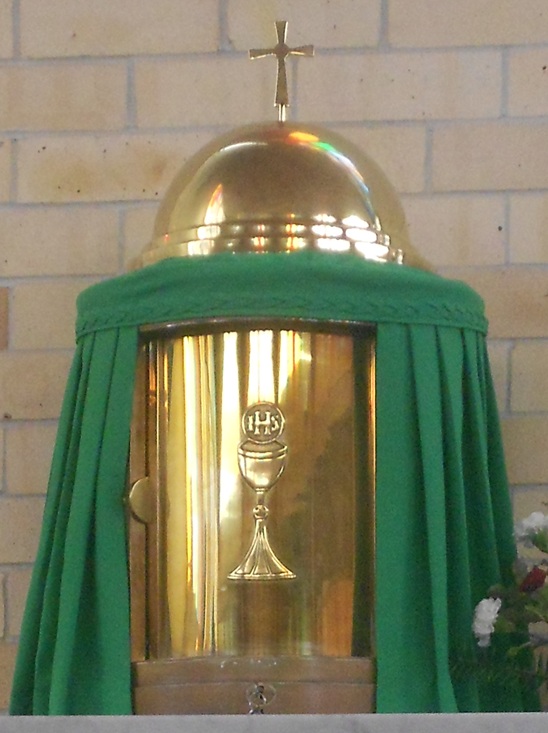
Before Jesus’ birth, Mary, the mother of Jesus, became “Theotokos”, the God bearer, Jesus’ first dwelling place. In Catholic churches, the tabernacle is the precious recipient of the Blessed Sacrament – another earthly dwelling place of God.
It was Pope Boniface VIII who declared the first Holy Year in 1300 and designated the first Holy Door to the Lateran Basilica.
Vatican sources explain the moment of entering through a Holy Door: “Crossing this threshold also symbolizes the journey of conversion, sealed by the encounter with Christ, the “door”, uniting us with the Father.”[i]
When we receive the Eucharist, we are becoming temples of God, but we also have to remember that it also means that we are on a “journey of conversion”, we are being transformed… As Kieran Fenn fms often said, receiving the Eucharist means service and humility given that Jesus truly lived it and is present in the Word and the Eucharist…
[i] https://www.vaticannews.va/en/pope/news/2024-12/popes-jubilees-holy-door-history.html