2 Maccabees 12:42-45; Philippians 3:20-21,16-18; Luke 7:11-17
Can we influence what comes after life on earth? This is a question that is foundational for most religions.
The Reading from Maccabees follows on the experience with the king Antiochus who seemed to have believed he was god-like and therefore could do anything to anybody. He persecuted the Jews of Judea and Samaria. When Antiochus wanted to rob the Temple, the believers ‘put him to flight’. His pride was hurt and so he went back to take revenge.
God protected the Jewish people and punished the king of Antiochus so badly that his men were praying for him. Antiochus repented and literally intended to turn around and make everything right that he had done wrong – but he died before he could carry out his good plans.
God, as the just judge, has often been called by people of faith to support a revenge. Judas, in this passage of Maccabees, did exactly this. After the enemies were defeated, Judas’ people honoured the Shabbat and buried their men who died in the battle one day later. When they were thanking God for the support in this revenge, Judas reminded his people to avoid sin and used his slain men as examples of what the punishment of unfaithfulness could be. However, Judas also believes in mercy and that prayer and sacrifice help the dead to rise again. Is this the passage that was used to justify indulgencies?
In his letter to the Philippians Paul warns of focusing on earthly matters and our earthly bodies. He points out that the better life comes after death. Jesus Christ is the most powerful ruler, and we belong to him.
While the chapter seems to be a consolation for the followers of Christ – giving hope to a better life after death, the context is important. It is not a passage of passivity but rather comforting those who suffer because they are fighting the good fight…
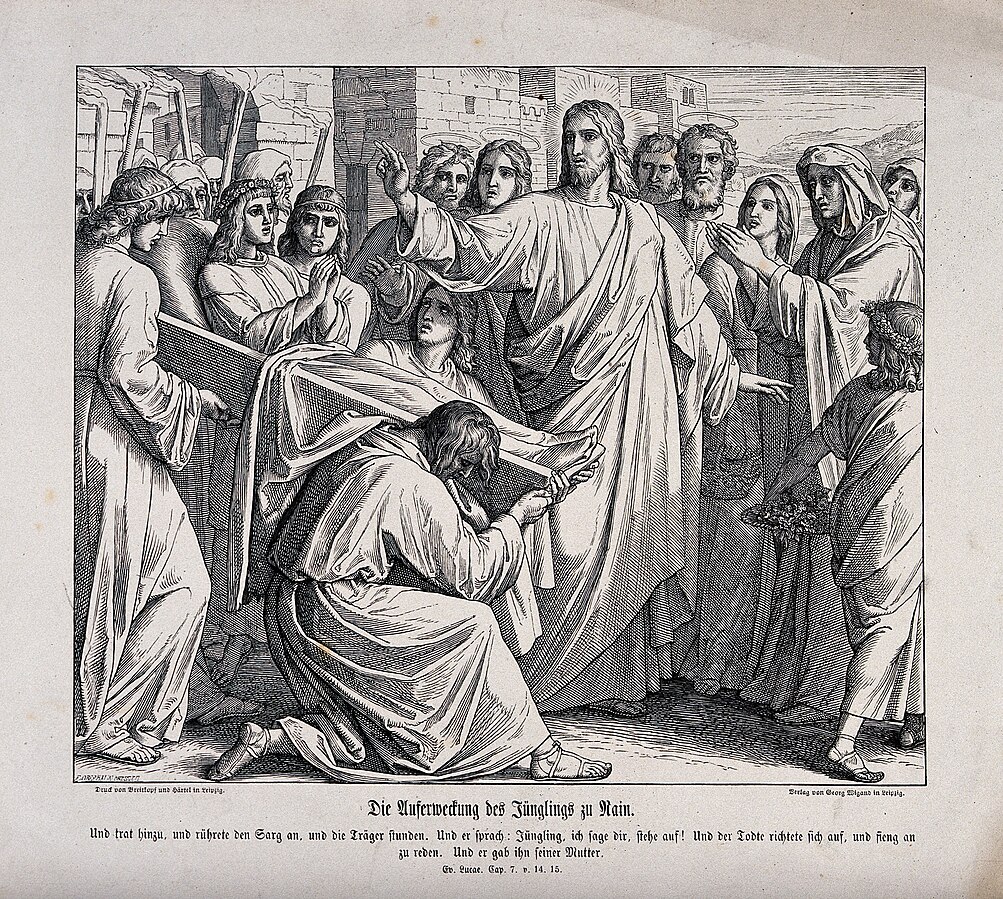
The widow of Nain was accompanying her son’s dead body. Jesus saw her pain, and he was deeply moved with compassion. He knew that a woman in his society who had no husband and no son was bound to poverty and misery.
Jesus decides to act. He doesn’t tell the woman that her son belonged to God, and his soul would continue to live. He doesn’t tell her that the son would have the perfect body in heaven and would watch over her from the distance. No, Jesus is thinking further. It is not about the dead person whose life on earth has ended. This person has nothing to fear anymore. Jesus sees the impact on the mother left behind who has not only lost her son, but who had already lost her husband previously.
Jesus cares for the living. He cares for them so deeply that death is not an obstacle for him. By giving life to the son, Jesus also gives life to the mother.
We are all connected. While we might not be able to resurrect someone from the dead, we can take care of those who are among us and feel that something has died in them. Sometimes, we can revive a sad person with a genuine and loving smile or a friendly word.
BM