Numbers 21:4-9; Philippians 2:6-11; John 3:13-17
The Israelites had complained about their lives in Egypt and were happy to have escaped slavery. The first step towards freedom and a new life was taken. They were expecting to be led into a beautiful new home with abundant food – a country of milk and honey.
After the dramatic escape and the crossing of the Red Sea, they would have been sure that they were looked after by God and didn’t have to worry.
However, they would not have expected that their journey would take so long. So, here they are. The Israelites are in the desert, the wilderness, and they are unhappy and miserable about their situation. Forgotten are the times of slavery and injustice. This time they complain about Moses. While he would have been the liberator for them, he has now become the scapegoat. The people’s anger and impatience turn against Moses and God.
God’s answer are fiery serpents whose bites are deadly. The Israelites realise that this is a punishment, and now they need Moses again to intercede. The complaints have turn into a call for mercy, and it is interesting to see that God doesn’t remove the serpents but rather provides a remedy for those who believe.
The people seem to have been afraid of serpents, and, in order to be saved, they have to look at a bronze serpent on a standard.
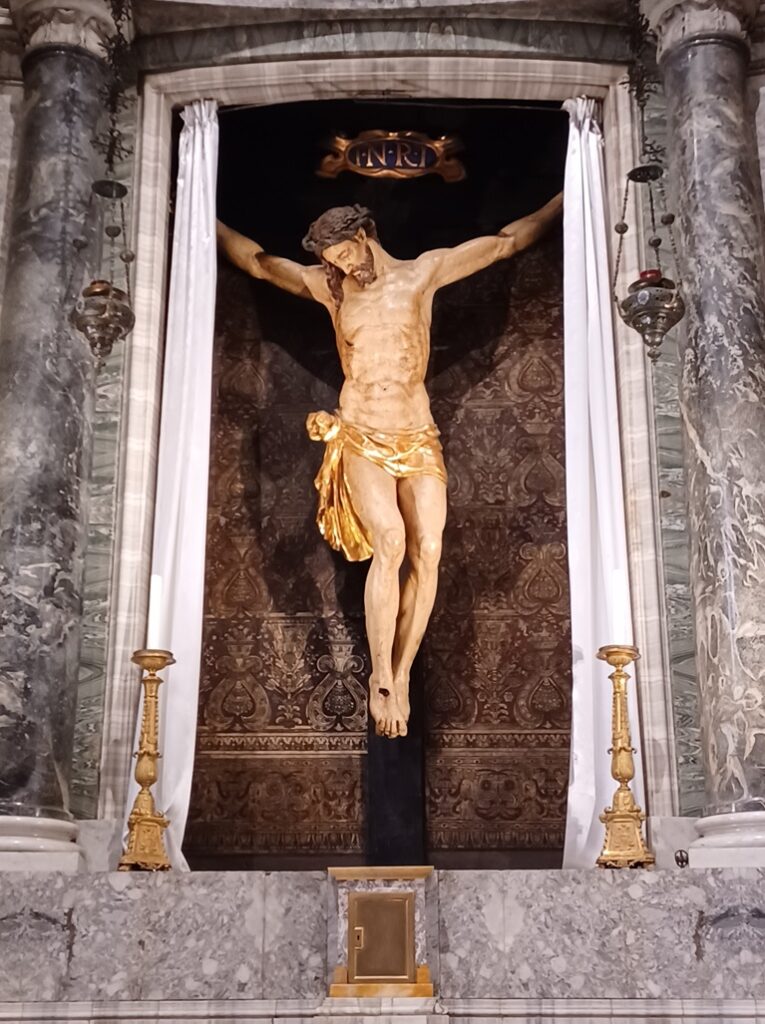
The Gospel reiterates the love that God has for the Israelites and that God has sent his own son to save those who believe. The Israelites are taught to be humble. What a contrast to the way Jesus is described in the Letter to the Philippians. Here it is pointed out that Christ Jesus humbled himself despite being equal with God. He could have claimed his divinity, but yet assumed the condition of a slave – precisely the situation out of which the Israelites were saved. He humbled himself so much that he accepted death on the cross.
The more Jesus humbled himself, the higher God raised him.
The Gospel according to John reiterates Jesus’ divinity. Right after the miracle story of Jesus turning water to wine and Jesus reminding the people that the temple was God’s house rather than as a market-place, Nicodemus spoke with Jesus.
Nicodemus, as a pharisee, would have known the Scriptures well, and Jesus connects with him through the account with Moses, the serpents and the people who had drifted away from God.
In the Book of Numbers, the Israelites were punished with serpents that God sent down to earth and to be saved, they had to look up to a bronze serpent on a standard. In the Gospel according to John, it is Jesus who is sent down to earth and through whom all who believe will be saved.
The Readings are beautiful accounts of hope as God loves us and is looking after us. God knows that we are not perfect, but he gives us a second chance if we have drifted away.
BM