Wisdom 18:6-9; Hebrews 11:1-2,8-19; Luke 12:32-48
Only faith can guarantee the blessings … Faith and trust are cornerstones of our belief.
Today’s passage in the Book of Wisdom reminds us that we can trust in God’s judgement. Award and punishment are in God’s hands.
Nothing is impossible for God as we read in the Book to the Hebrews.
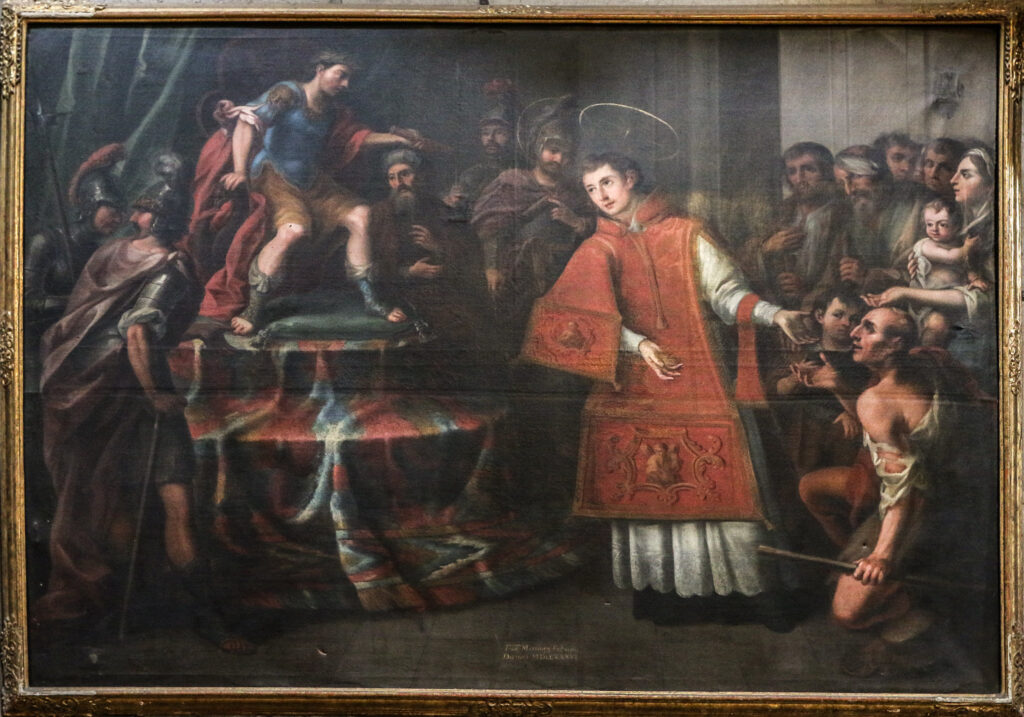
The 10th of August is the Feast Day of St Lawrence who certainly trusted in God so much that he did not hesitate to give his life for his belief. It is said that St Lawrence knew that he would be captured and killed, and so he prepared himself by giving away all his riches to the poor.
He did not know the hour when he would be arrested, but when it happened, he was prepared.
Abraham and Sarah have deep faith and are eventually awarded for it. Abraham complies with what God tells him to do – even if it is hard to do so. Abraham is prepared to leave his home and settles in the Promised Land where he and his household live in tents. He is promised a vast number of descendants, but he and his wife Sarah are getting old without having an heir.
Abraham doesn’t give up. He is prepared for God to act when the right time has come.
God’s promises don’t end with life on earth. Abraham is promised a big city, and he is told that his descendants would come through Isaac. His faith in these promises is so strong that he is ready to kill this very son Isaac before he had any children of his own. How could the promise of descendants be possible if Isaac is dead? Abraham’s faith tells him that God would find a way. Even if he was not granted the blessing to see his grandchildren. God could raise the dead.
God’s time is not our time. While we need to fulfil our promises and our readiness constantly, we don’t know if we are to see the fruits of it. We can only do our part, plant seeds and care for them. We have no right to taste the fruit. However, if we do get the chance to taste the fruit, this will be a special blessing.
Sarah would have longed to have a son for so many years. When she is promised a son at a very late stage of her life, she couldn’t believe it. She thought that her time was over – when God unexpectedly blesses her with a son.
We might be waiting for our dreams to come true, but sometimes our life journeys lead us in mysterious ways, and we might only realise much later that the obstacles in life have made us strong enough to reach our goals.
Just as Abraham and Sarah have been waiting, Jesus comforts His disciples so that they don’t give up. God’s Kingdom will come.
The disciples are asked to sell their possessions and give alms, because ‘where your treasure is, there will your heart be also.’
This advice sounds again like the story of St Lawrence who supposedly sold his possessions, gave the money to the poor and when the prefect of Rome asked him to show his treasures, he courageously showed them the blind, lame, maimed, leprous, orphaned, and widowed persons and presented them as his treasure. St Lawrence was martyred for his defiance. He died in the 3rd century, and the accounts of his life and death would have been an example of carrying out Jesus’ call to His disciples.
Peter’s reaction to Jesus’ story about being prepared and knowing what the treasures are is surprising. He asks if the same rules apply for all. Jesus clearly rebukes the thought that there would be any hierarchies or exceptions for anybody. We all need to be prepared at all times. In fact, Jesus says that those who are in charge of other people or have been given much, need to lead as good examples. They can’t claim ignorance, and their responsibility to obey God is in no way less but rather bigger than anybody else’s responsibility. They will be held accountable in God’s time.
This message is certainly not meant as a threat but as a reminder of one’s own responsibility for our actions. If we follow Abraham’s example and are led by faith, we will receive abundant blessings.
BM