Acts 7:55-60; Apocalypse 22:12-14,16-17,20; John 17:20-26
‘Lord, do not hold this sin against them’. These words by Stephen after he was stoned reminds us of Luke 23:34, where Jesus is quoted with the words “Father, forgive them, for they do not know what they are doing.”
Jesus had asked God to receive His spirit. Stephen asked Jesus to receive his spirit.
The first Reading refers to a time, when rules for Christians were still being made. The Jewish and Greek followers of Jesus were not treated equally and complained. Seven men were chosen, who had to be “known to be full of the Spirit and wisdom” (Acts 6:3). Stephen was one of those new missionaries. The Holy Spirit gave him wisdom, and it seemed like he could withstand any dispute. There was no legitimate way for his enemies to get rid of him, and so, the life of the first Christian martyr resembled in many ways, the ministry and death of Jesus.
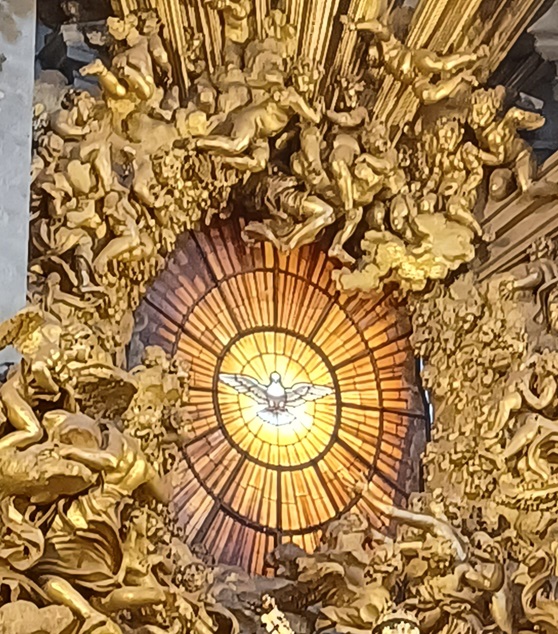
The Holy Spirit gave Stephen wisdom and understanding that was challenging to the people who heard him. He had the choice to keep it to himself or to share it with others. As a true missionary filled with the Spirit, he shared his knowledge even to his enemies and risked his life by doing so. He called out that he saw the glory of God and “the Son of Man standing at the right hand of God”. He identifies the “Son of Man”, quoted in the Book of Revelation, as Jesus.
His enemies “stopped their ears with their hands”. Were they afraid? Did they not want to hear? Did they believe that Stephen’s words could make them impure or influence them? The scene reminds me of Oedipus who had his fellow sailors stop their ears so that they would not be tempted by the Sirenes’ deadly songs.
Saul, who later becomes Paul, is mentioned, but not as an active participant of Stephen’s execution. The witnesses put down their clothes at his feet. Does this mean that they respect Saul as an authority? His new identity as Paul, the missionary, is not yet achieved.
The identity of Jesus as the “Son of Man” is further clarified in the Book of Revelation, where John heard a voice that promised that He would be coming again, soon. It is interesting that there is another reference to clothes. This time not clothes that are laid at the feet of someone but rather clean, washed robes. Clothes are used as symbols in many ways, but especially to show respect, authority and readiness.
Get ready, be ready. Jesus is coming. The time is near.
Jesus himself confirms that He is coming. He confirms who He is. The very Jesus who was born into the line of King David. All who are ready are invited to join. Everyone who listens… so don’t stop your ears…
The promise that Jesus would be back is also part of the prayer in today’s passage from the Gospel according to John: “Father, may they be one in us, as you are in me and I am in you, so that the world may believe it was you who sent me.”
Jesus has been sent by God. This is what the world is to know. Jesus knows that God loves him, and he loves those who believe in him in the same way that God loves Jesus. Jesus cares for the people and wants to be with them.
They are to see the glory God has given to Jesus – just as Stephen did. Jesus had asked God to receive His spirit. Stephen asked Jesus to receive his spirit.
We need to be united in this belief that we will see God’s glory. We can trust in Jesus coming again as promised – but in God’s time. We have not been forgotten, but we need to be ready, united and remember that the love with which God loved Jesus needs to be in us.
BM