Acts 15:1-2,22-29; Apocalypse 21:10-14,22-23; John 14:23-29
Paul and Barabas had come to support the apostles in their work to spread the Good News in Iconeum, in today’s Turkey. The people of the city were divided; some sided with the Jews who rejected Jesus’ teachings, others with the apostles. The situation escalated and Paul and Barabas had to flee the city. In Lystra, where Paul demonstrated that God’s power was with him, he ended up being stoned and almost killed, but Paul and Barabas didn’t give up. They returned to the places they had fled, continued spreading the Good News and gaining followers.
While the first believers of Jesus were Jewish, many of the new believers were not. Jesus had been a practicing Jew, but it was not clear in which way Judaism was the foundation for the new believers. Do the gentiles need to get circumcised?
There was no consensus. So, it was decided to consult the authorities, the apostles and elders in Jerusalem. These authorities took a decision and replied in writing. Judas and Silas were chosen to be the messengers. In their official letter the authorities clarified that they decided together with the Holy Spirit that: “you are to abstain from food sacrificed to idols; from blood, from the meat of strangled animals and from fornication.” No mentioning of other Jewish laws.
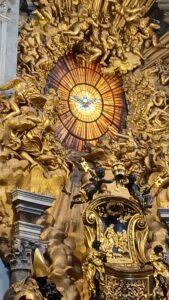
The apostles as those who were chosen and sent by Jesus have been given the authority to take decisions together with the Holy Spirit. This is very much like asking the Pope for a decision. The popes are considered successors of the Apostle Peter and are elected while invoking the support of the Holy Spirit.
In Lent, Satan led Jesus on a high mountain, showed him the land and made promises. This time it is not about a temptation but a positive vision: in the Book of Revelation, John has the vision of an angel who took him “in the spirit” to a high mountain, where he showed him the new Jerusalem. Coming from God and Heaven, this new Jerusalem was seen as a radiant, very precious and in general, a special city with walls of 12 gates, 4 (from all directions) x 3 (number of completeness). Every gate had an angel and was dedicated to one of the Israelite tribes.
In this vision, rather than seeing a city that is being dominated by a Jewish temple, in the new Jerusalem, God and the Lamb (Jesus) were themselves the temple.
In the Gospel according to John, Jesus makes it clear that his teachings need to be followed. So, the procedure in Acts where the rules were clarified and the Holy Spirit was invoked, would be a cornerstone of the new belief. Jesus promises to be back, and it was believed that this coming would be soon. Once Jesus was back, the Law would be finished.
The teachings of Jesus and the decision by the authorities that only basic rules needed to be followed by new believers, made it easier to spread the Good News.
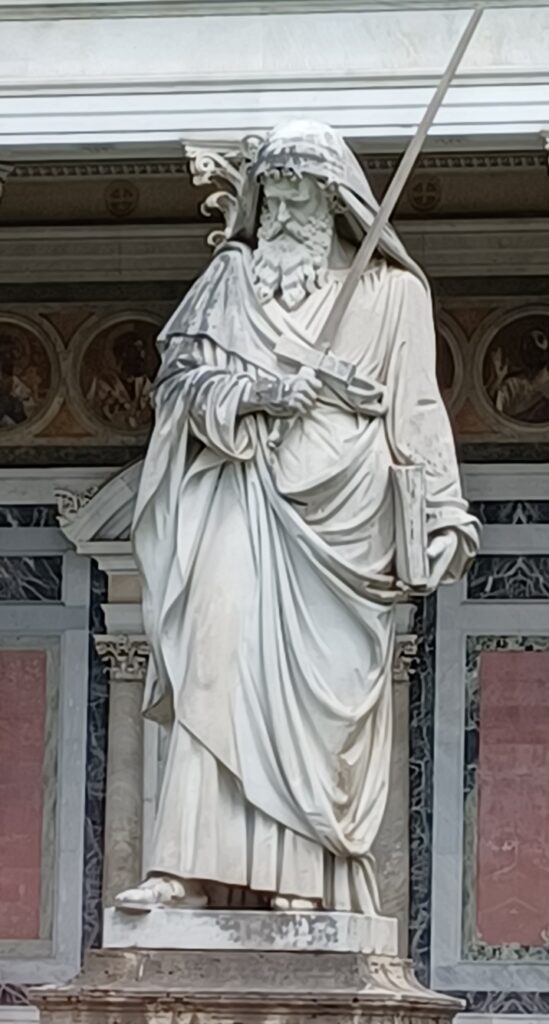
Paul became a leader and the missionary to a people beyond his own culture.
St Paul is known for pointing out the equality in his missionary work: “There is no longer Jew or Greek, there is no longer slave or free, there is no longer male and female; for all of you are one in Christ Jesus.”
BM