“How many Sacraments are there in the Church?” This is a question that Bishop Gonzalo López Marañón, then the bishop of the Apostolic Vicariate of San Miguel de Sucumbíos, Ecuador, asked every time we spoke to a class of students.
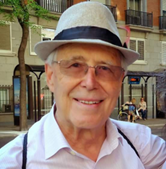
It was in 2002 when I was working in a fundraising and advocacy campaign in Germany and was travelling the country with Bishop Gonzalo López Marañón who was invited to speak at clergy meetings, parishes, schools and community events. He was a Spaniard who spent most of his life in Ecuador and never learned English – let alone German.
During the travels I became his organiser, his interpreter and his voice. As we mostly travelled by train, the hours on the train became my window to the Catholic Church in Latin America. Bishop Gonzalo López was formed by Vatican II and the Theology of Liberation. He introduced me to terms such as inculturation and the option for the poor and grassroots (ecclesial) communities (comunidades de base). He also told me about CELAM, the Consejo Episcopal Latinoamericano y Caribeño (the Latin American and Caribbean Episcopal Council), and especially their conferences in Medellín and in Puebla.
I remember when we were in a huge Gothic cathedral where he was asked to be one of the celebrants for a special service. He was sitting in the far end of the nave, behind the Table of the Lord. After Mass, Gonzalo, as he wanted to be called, told me that he had wished to have had binoculars. He was very disappointed that he was so removed from the people that he couldn’t see the congregation properly.
There were many other situations where he challenged the picture the people had of a bishop. He always said that God loved us all and that we all had an inherit dignity. He called people to speak up when they see injustices.
One story that he kept telling at events was about the elephant and the ants. When people said that they were powerless, he would say that many ants working together could really bother a big elephant. Never underestimate the power of the community and of solidarity.
When Gonzalo López Marañón arrived in Sucumbíos in 1970, he arrived at a time of change. This Amazonian area borders to Columbia and to Peru and had been a so-called unexplored area, where only indigenous people lived – until oil was discovered in its soil. This discovery led to significant changes through the exploitation of oil and with a huge increase in population.
The situation in 2002, when I was working with the bishop, was further dominated by the consequences of a horrific earthquake that caused major damage in the Diocese, and the constant arrival of Colombian refugees who had come to the area to look for shelter and peace. Bishop Gonzalo López knew that an attitude of solidarity was crucial in this situation.
The concept of solidarity became one of his key concerns.
Speaking to Catholic students and parishioners, he would ask: “How many Sacraments are there in the Church?” The answer seemed to be easy. The Catholic Church recognises seven Sacraments. However, when hearing this answer, the bishop would sometimes look at the teacher or the priest in the room and repeat his question. This was quite an embarrassing moment.
Bishop Gonzalo López would then correct everyone saying: “No. There are eight Sacraments.” That’s when the room became silent. Into this silence he would add: “Never forget the Sacrament of Solidarity” – “El Sacramento de la Solidaridad”.
The friendly manner in which the bishop spoke and the determination which he displayed when he added solidarity to the Sacraments of the Church were impressive. Even many years later, I still see him in front of me speaking these words.
Bishop Gonzalo López Marañón, born in Burgos, Spain, just before the Spanish Civil War and who spent most of his life as a Carmelite in Ecuador, passed away on 7 May 2016.
In an obituary for him he was quoted with the words: “Todos somos responsables de luchar por el respeto y la vigencia de los derechos humanos… su violación no se justifica en ningún caso.” which translates to “We are all responsible for fighting for the respect and the fulfilment of the human rights… violating against them can never be justified.”
BM