What are the right palms for Palm Sunday?
Palm Sunday, which is a common name for Passion Sunday is the Sunday before Easter. In the Gospel we hear about Jesus entering Jerusalem and the people welcoming him full of hope – calling “Hosanna!” which means “Save us!”. This year we hear the Gospel according to Matthew, where it doesn’t clarify the type of tree: “Most of the crowd spread their garments on the road, and others cut branches from the trees and spread them on the road.“
In many parishes around the world the scene of Jesus entering Jerusalem is at least symbolically re-enacted. Depending on the countries and the weather, there would be a procession around the church or there might even be someone riding a donkey.
While this is widespread in some countries, the people in other countries limit the re-enacting to waving branches.
The question here is what kind of branches should be used?
Was Jesus welcomed into Jerusalem with the people waving palms or rather olive branches to symbolise the King of Peace?
In the Middle East, India, Asia and many tropical countries or areas, the people might have real palms that are easily available. According to Wikipedia, “Their growth form can be climbers, shrubs, tree-like and stemless plants, all commonly known as palms. Those having a tree-like form are colloquially called palm trees. Currently, 181 genera with around 2,600 species are known, most of which are restricted to tropical and subtropical climates.” Even New Zealand has a native palm tree: the Nikau Palm.
The official term for palms is Arecaceae. This word is apparently derived from the word areca with the suffix “-aceae”. Areca is derived, via Portuguese, from Malayalam അടയ്ക്ക (aṭaykka). So, even the generic word is connected to South India with a tropical climate.
In Europe, it is very hard to grow palms or palm trees. They need to be protected from the frost in the winter and hence become so precious that one wouldn’t cut the palms for Palm Sunday.
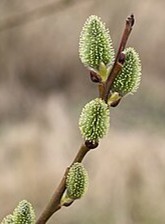
However, people find alternatives – an inculturation out of necessity: in Germany, for example, the so-called “Palmkätzchen” are used. Even though they bear the name “Palm”, they have nothing to do with a palm. Rather, I believe that it was due to their use on Palm Sunday that they were given this name. The second part of the name derives from the German word “Katze”: “Kätzchen” which is a kitten. The English name points also to one of the characteristics of this plant: willow catkin. The buds are soft and feel like the fur of a kitten.
The catkins that are cut for Palm Sunday are put in a vase and decorated with beautiful Easter eggs on Easter Sunday.
However, even branches of willow catkin are often difficult to get. Alternatively, some people might use forsythia. If they are cut on Palm Sunday and taken into the heated home, they will bloom quicker and usually be in bright yellow by Easter Sunday. Then they are decorated with Easter eggs.
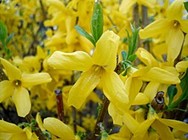
After a long winter and the bare branches during Holy Week, the yellow flowers at Easter bring so much joy into the houses. Adding the often hand-decorated Easter eggs on strings to the bouquet is like adding hope and life to the “resurrected” nature.
Only if one has lived through months of cold days and nights and bare trees of winter, can one really appreciate these symbols. Nature reawakens and even the birds that had travelled to warmer climates are coming back.
So, what are we going to bring to Palm Sunday this year?
In Aotearoa New Zealand, we might think of a native alternative to palms: fern leaves? It is said that New Zealand has an unusually high number of fern species for a temperate country and about 40 per cent of these species occur nowhere else in the world.
We could use the fronds – as the leaves of ferns are called. What about the silver fern or ponga?
Fern leaves are easily accessible in many parts of the country; they are easy to wave and have no spikey ends that might hurt people around you.
Each country has its own traditions around Palm Sunday. In a country of immigrants, why not use the plants that have been here before any settlements?
BM