Isaiah 49:3,5-6; 1 Corinthians 1:1-3; John 1:14. 12; John 1:29-34
When the Society of Mary was founded in 1836, Pope Gregory XVI asked the members of this new Society to spread the Good News to Oceania which was considered the end of the earth – from a European perspective. One of the founders of the Society, Jean-Claude Colin seems to never have professed a personal desire to go to the foreign missions, but his call to mission in “any part of the world” was explicitly part of the original plan.
Isaiah was given this message of bringing God’s light to the ends of the earth, but in his time, the general worldview would have been much different.
Prophets announce, warn and call for repentance. The prophet Isaiah, whose name is often translated as ‘the Lord saves’, describes how God had known and chosen him even before he was born. He confirms that God wanted to be glorified by the people of Israel. However, while God wants the descendants of Jacob to repent and to return to God, God also wants Isaiah to reach beyond the tribes of Israel: ‘I will make you the light of the nations so that my salvation may reach to the ends of the earth.’
What would have been the light of the nations and what was the ends of the earth at the time? As a light of God, Isaiah would be able to enlighten and lead the people, and ultimately to reveal God to them. As a prophet, he is in direct communication with God. He, as the light of the nations, could be seen from afar like a star in heaven – and as this light knows no borders, it would spread to all nations.
In the Letter to the Corinthians, it becomes clear that Paul also feels chosen by God. He clearly states that he was appointed to be an apostle, a person who is sent.
Paul addresses the people of Corinth directly, calling them the ‘church of God’ and the ‘holy people of Jesus Christ’. Even if they don’t know it yet, there is a place prepared for them that they can take as soon as they have found their way to Jesus Christ. The church of God is bigger than any specific nation or region. Corinth at the time of St Paul was multi-cultural and multi-ethnic. It was a strategically located city with a vibrant and diverse community.
In his Damascus experience, Paul was blended by a bright light. He encountered Jesus and turned his life around. Now, Paul is spreading the light that he has experienced. It is a power of transforming grace in one’s life.
In the Gospel Acclamation, the concept of ‘church’ is clarified, and in one single sentence, Christian life is explained: ‘The Word of God became flesh and dwelt among us. He enabled those who accepted him to become the children of God.’
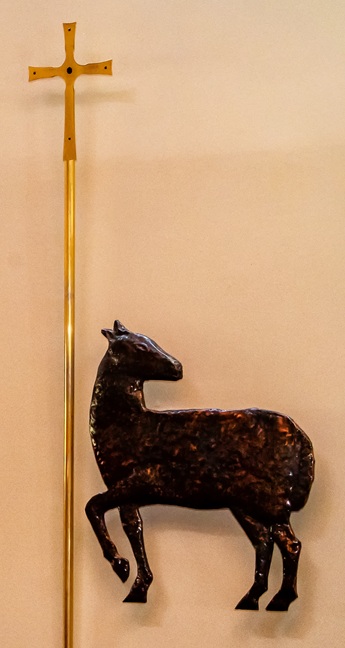
When John sees Jesus, he calls him ‘the lamb of God that takes away the sin of the world’. Does he know what God will ask of Jesus? In Jesus’ time and surrounding, many people had sheep and lived quite closely with these sheep, especially when they were young. So, people would have been very attached to their lambs and might have even considered them part of their family. It must be heartbreaking to sacrifice one of these lambs – and hard to choose one of them for the sacrifice.
Today’s passage of the Gospel according to John may surprise when we hear that he focusses on Jesus being the chosen one who was to fulfil the Scriptures and the messages revealed to John. No reference to any family ties between John and Jesus. It sounds as if John the Baptist didn’t know Jesus?
However, the personal relationship between John and Jesus are not relevant in the context. John was waiting for the Chosen One. He knew the signs, and he recognised Jesus as this Chosen One who fulfilled the description John had received.
In our three Readings, we hear of three chosen ones: Isaiah, Paul and Jesus. Each one was chosen for a different reason. Isaiah to be the light of God, Paul to bring people together in the name of Jesus Christ – and Jesus to be our Saviour, the one who takes away the sin of the world.
What is our calling? What are we chosen to do? We all have our unique calling, but we might agree in Paul’s message to the Corinthians: ‘May God our Father and the Lord Jesus Christ send you grace and peace.’
BM