Genesis 14:18-20; 1 Corinthians 11:23-26; Luke 9:11-17
Melchizedek was a priest, the king of Salem and a righteous man. According to some sources, his name means ‘king’ (melek) and ‘righteous’ (sedeq). As mentioned in last week’s reflection, there are only very few men who were called ‘righteous’ in the Scriptures. One of them was Abraham. So, the blessing of the righteous Melchizedek on the righteous Abraham is certainly important.
At the time of this special blessing, Abraham was still called Abram. Melchizedek calls on God, the Creator of heaven and earth. Abra(ha)m had just successfully freed his nephew Lot and family after Sodom, the kingdom where his nephew lived, was taken in a battle.
In this context, the blessing over bread and wine would also have been a blessing of thanksgiving which translates into Greek as “Eucharist”.
Both, bread and wine are part of the blessing as also used in Jewish prayers today “fruit of the earth and work of human hands”. The Garden Eden would not have had neither bread nor wine as they need the right fruit of the earth which only grow when the right conditions and care are provided, and then further work is invested – and enough time. The bread needs time for the yeast to make it rise, and the wine needs time to mature.
Abra(ha)m’s men have not only freed the captured, but they have also recovered the stolen goods. If this is the background of the tithe mentioned, then it might be a tithe of the recovered goods that Abra(ha)m paid to the priest.
In 1 Corinthians, the prayer over bread and wine becomes our Eucharistic Prayer. Added to the Jewish prayer of Thanksgiving is the reference to Jesus’ passion, death and resurrection.
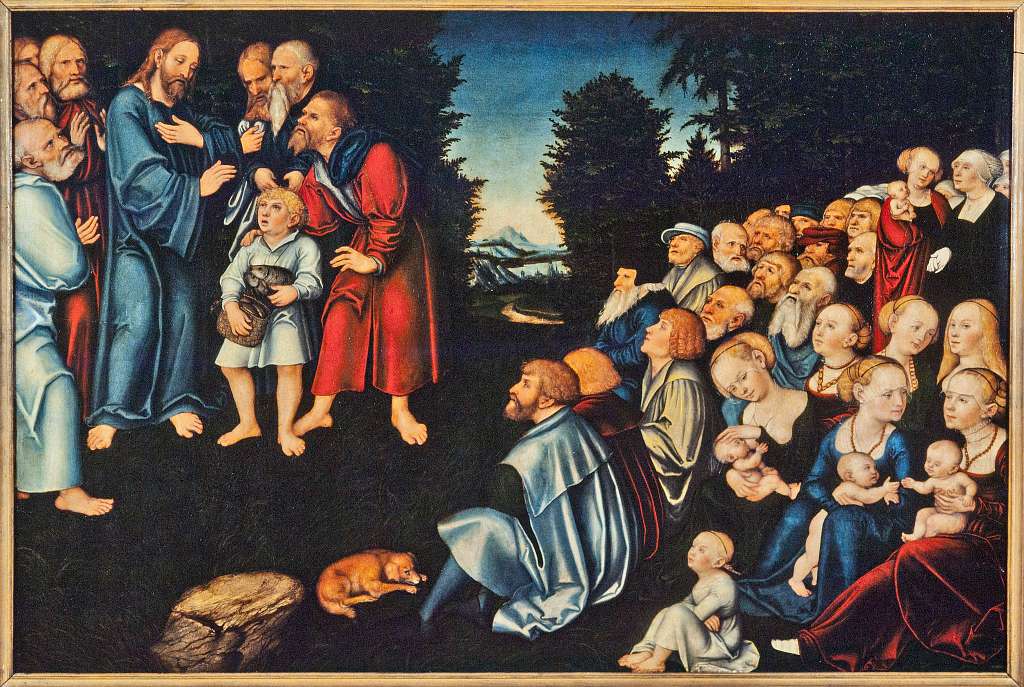
The feeding of the five thousand is a beautiful miracle-story and example of feeding the hungry. The disciples first want to push any responsibilities away from them, they see the number of people, see what they have to offer and want the people to be sent away. But Jesus thinks differently. Jesus sees the faith of the people, the hope that they have put in him and thinks beyond all rationality.
Faith can move mountains, as it is often said. Jesus is confident that nobody has to be sent away. He first asks the disciples to feed the crowd and to get active, but they look at what they have and deny his wish. Jesus blesses what the disciples give to him: 2 fish and 5 loaves of bread and he asks his disciples to distribute the food.
How would this have looked like? Would the disciples have broken the bread and the fish to distribute small portions?
From a practical point of view, it sounds as if a sacristan would tell the priest: sorry, we don’t have enough hosts for all these people who have surprisingly come to Mass.
This sacristan would sound unprepared and without hope, not ready to think of a solution that would include everyone. However, the priest would most likely share the bread with more people and therefore give each person a small piece. The more people, the smaller the pieces. Everyone who comes for Communion needs to be served.
While bread and wine are shared, we need to think of those who are missing out – because they are sick, unable to access the church, wounded or hurt. While we might be able to reach some of them through taking Communion to the sick, others can’t be reached physically. So, we need to pray for them and remember them just like we are remembering Jesus’ passion, death and resurrection. At the same time, we are called to find ways to actively reach out to them and include them.
This Sunday, we remember especially all migrants in the world. We pray for them as they undertake sometimes dangerous journeys to reach a country of refuge. We think of them and their struggles to make a strange place their home, and to feel recognised and acknowledged in their work and contributions to society in their new home.
BM